Be your Logistics Department in China
Customized logistics solutions, your logistics expert in China
Customized logistics solutions, Shipping from China to the World
Tel:+8613424475220 Email:info@viputrans.com 
 English

In the global logistics industry, geopolitical events are not just political news—they are key variables that can reshape supply chain costs and transportation planning.
The growing tensions involving the United States, Israel, and Iran have once again drawn the attention of logistics professionals worldwide.
For exporters, importers, and freight forwarders, understanding how such conflicts may influence energy markets and transportation costs is essential for maintaining stable supply chain operations.
From a logistics perspective, the most immediate concern is the potential impact on global oil prices and transportation fuel costs.
The Strategic Importance of the Middle East for Global Logistics
The Middle East remains one of the most strategically important regions for global energy supply and maritime trade. Any escalation of military conflict in this region can quickly influence international shipping markets.
One key factor is the security of major maritime routes. The region includes critical shipping passages that connect oil-producing countries with global markets. Any disruption, increased military presence, or security concerns can lead to higher insurance costs, shipping risks, and market uncertainty.
For logistics companies and international traders, this type of geopolitical risk often translates into volatility in fuel prices and transportation costs.
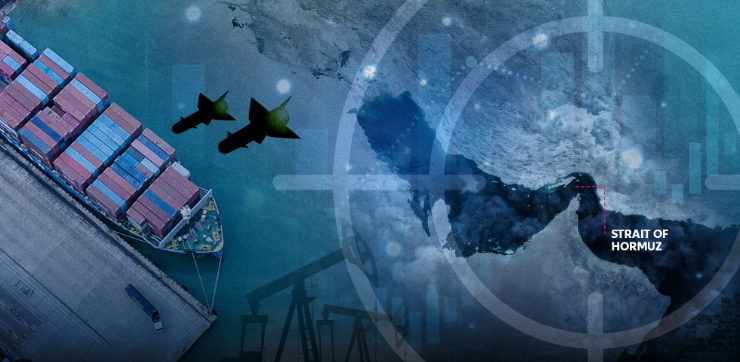
Oil Price Volatility and Its Direct Impact on Freight Costs
Fuel is one of the largest operational expenses across the entire logistics industry. When global crude oil prices rise, the impact spreads quickly across multiple transportation sectors.
For logistics professionals, monitoring energy market trends becomes an essential part of managing freight cost expectations.
Shipping lines typically adjust bunker fuel surcharges when fuel prices increase. These adjustments can raise sea freight costs, particularly on long-haul trade lanes between Asia, Europe, and North America.
Air cargo operations are even more sensitive to fuel price fluctuations. Aviation fuel represents a significant portion of airline operating costs, and rising fuel prices often result in increased air freight rates.
Trucking and rail transport are directly influenced by diesel price changes, which affect inland transportation and first-mile or last-mile delivery services.
Could Rising Oil Prices Increase Domestic Transportation Costs in China?
China's domestic fuel pricing mechanism is closely linked to global crude oil market trends. When international oil prices increase significantly, China typically adjusts domestic gasoline and diesel prices accordingly.
If geopolitical tensions drive oil prices higher, several logistics cost components in China may be affected, including:
1. Factory pickup trucking costs
2. Inland container transportation
3. Port drayage and short-distance delivery services
4. Regional trucking between manufacturing hubs and export ports
For exporters, this means that the cost of moving cargo from factories to ports may gradually increase if fuel prices continue to rise.
However, from an industry perspective, domestic logistics costs in China are influenced by multiple factors, including freight demand, seasonal shipping volumes, driver supply, and transportation capacity. Fuel price increases alone do not always translate into dramatic cost spikes.
How Professional Logistics Providers Respond to Geopolitical Risks
Experienced logistics providers understand that geopolitical uncertainty is part of global trade. Instead of reacting passively, the key is proactive supply chain management.
Professional logistics teams typically monitor several indicators simultaneously:
l Global crude oil price trends
l Shipping line fuel surcharge adjustments
l Airline fuel cost structures
l Inland trucking market dynamics
l International trade demand fluctuations
By continuously analyzing these factors, logistics providers can anticipate potential cost changes and help clients adjust transportation strategies accordingly.
This may include optimizing shipping schedules, selecting alternative transportation modes, or combining sea, air, rail, and multimodal logistics solutions to maintain supply chain efficiency.
The Importance of Flexible Logistics Planning
In today's interconnected global trade environment, supply chain resilience is becoming more important than ever. Political tensions, energy market fluctuations, and transportation capacity changes are all variables that logistics professionals must constantly evaluate.
For exporters and international buyers, working with experienced logistics partners can significantly reduce uncertainty and help maintain stable transportation costs even during periods of geopolitical tension.
At VIPU SUPPLY CHAIN LOGISTICS CO., LTD, we continuously monitor global logistics markets, transportation trends, and geopolitical developments to provide our international clients with reliable and flexible logistics solutions.
Our goal is not only to move cargo from point A to point B, but also to help customers navigate the complexities of global transportation with greater confidence.Welcome to your inquiries.Phone/WeChat/WhatsApp:+8618926970495;EM:sales04@viputrans.com; Shawn;
Conflicts involving major geopolitical players such as the United States, Israel, and Iran have the potential to influence global energy markets and indirectly affect international logistics costs.
Rising oil prices may increase transportation expenses across ocean freight, air freight, and inland logistics, including trucking costs within China. However, with professional logistics planning and close monitoring of market trends, these impacts can be effectively managed.
In a rapidly changing global environment, informed decision-making and flexible logistics strategies remain essential for maintaining efficient and cost-controlled supply chains.Welcome to your inquiries.
Copyright © 2003-2026 VIPU Supply Chain Logistics Co., Ltd. | All Rights Reserved
LOGISTICS | E-COMMERCIAL FULFILLMENT | ABOUT US | CASE | NEWS | VIDEO | CONTACT US
We will find the fastest or the cheapest way for your shipment. Please specify: where from, where to, what to ship.