


Shipping from China to Spain (2026): Rates, Transit Times, and Shipping Methods
We not only transport goods to major Spanish cities such as Madrid and Zaragoza, but also provide freight services from China to the Spanish archipelago, such as the Canary Islands and the Balearic Islands. Some of our clients are from the archipelago, and we have experience in handling the complex customs clearance and transportation issues faced by these countries.
What Shipping Methods Do We Offer from China to Spain?
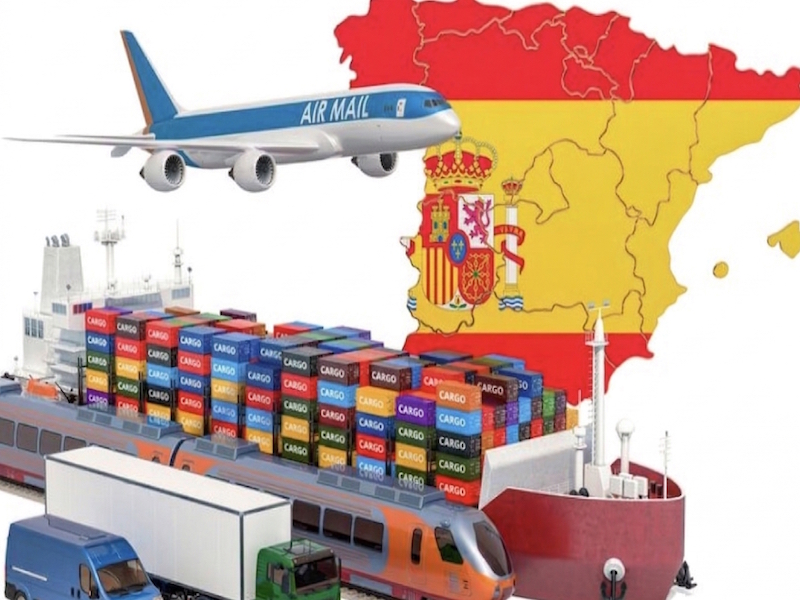
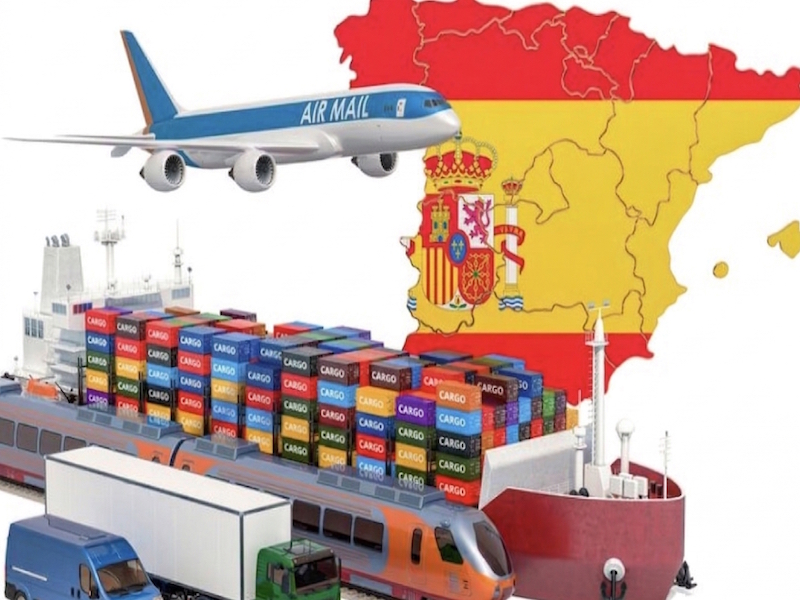
The main modes of transport for goods imported from China to Spain are sea and air freight, accounting for 80-90%. This is due to the extremely low cost of sea freight and the high efficiency of air freight. Other modes of transport include rail and truck.
Sea Freight to Spain
We offer sea freight from China to Spain, including full container load (FCL) and less than container load (LCL) shipments. Sea freight is a suitable option for price-sensitive clients. With extensive experience in ocean shipping, we can provide you with highly cost-effective and secure sea freight services.
Air Freight to Spain
For goods requiring a rapid supply chain, air freight is the best choice. We offer air freight services from China to Spain, transporting goods to major Spanish airports such as Madrid-Barajas Airport. We have long-standing partnerships with airlines such as CA, ZH, and TK, enabling us to provide you with high-quality and cost-effective air freight services.
DDP Service to Spain
For companies wishing to focus on their own market or buyers who do not wish to deal with complex customs documentation, DDP shipping is the best option. We offer a one-stop DDP door-to-door shipping service from China to Spain, with compliant customs clearance throughout the process, no hidden fees, and guaranteed on-time delivery.
Trucking to Spain
We offer flexible trucking services from China to Spain, handling customs clearance and taxes at hubs in Poland, Hungary, Belgium, etc., before delivery to the destination in Spain. Delivery time is 14-23 days. Loading and transportation are available immediately; large-capacity battery products can also be transported.
China-Europe Rail to Spain
If you need a balance between cost and time, rail transport is a good option. Our carrier operates regular weekly rail services to Spain, providing direct trains to Madrid, the Zaragoza rail hub, and third-party European rail hubs, with services extending to designated destinations within Spain. Our rail transport services offer fast customs clearance and a stable transit time of 16-19 days.
Our additional logistics services from China to Spain
1. Free China warehousing services
2. China export customs declaration, Spanish customs clearance, and tax payment
3. Pick up goods from your suppliers
4. Consolidate goods from multiple suppliers into one package
5. Assistance in finding suppliers and sourcing goods
6. Verify factory qualifications and conduct on-site factory address visits
7. Insurance covering the equivalent value of the goods
8. Extra reinforced packaging
9. Last-mile delivery from Spain to your door
Why Choose VIPUTRANS as Your Freight Forwarder from China to Spain?
1. Extensive experience in freight transportation from China to Spain, including handling complex cargo such as batteries, liquids, and heavy machinery.
2. Long-term partnerships with professional Spanish customs clearance teams to handle your customs documents and taxes.
3. Obtain highly competitive sea and air freight rates from carriers.
4. Cooperative warehouses in over 10 cities in China, providing free storage for your goods.
5. Cargo quality and quantity inspection, providing photos and videos of cargo samples.
6. One-stop logistics service, door-to-door delivery.
7. Reasonable and transparent pricing, no hidden fees.
8. Cargo tracking, updating key cargo milestones.
9. Assistance with your suppliers in correcting erroneous document formats, ensuring consistency, accuracy, and completeness between Chinese export and Spanish import documents.
10. Connect you with the most available manager within the current timeframe and 24/7 online support.
How much does it cost to ship from China to Spain?
Shipping Method | Transportation time | Price (USD) |
Full Container Load shipping from China to Spain | 30-45 Days | 2929-4010/40HQ |
LCL Shipping from China to Spain | 33-47 Days | 40-100/CBM |
China to Spain rail full container shipping | 14-18 Days | 7314-9015/0HQ |
LCL rail transport from China to Spain | 16-21 Days | 165-217/CBM |
Air freight from China to Spain (1000 kg) | 4-9 Days | 4.01-4.55/KG |
Sea Freight from China to Spain
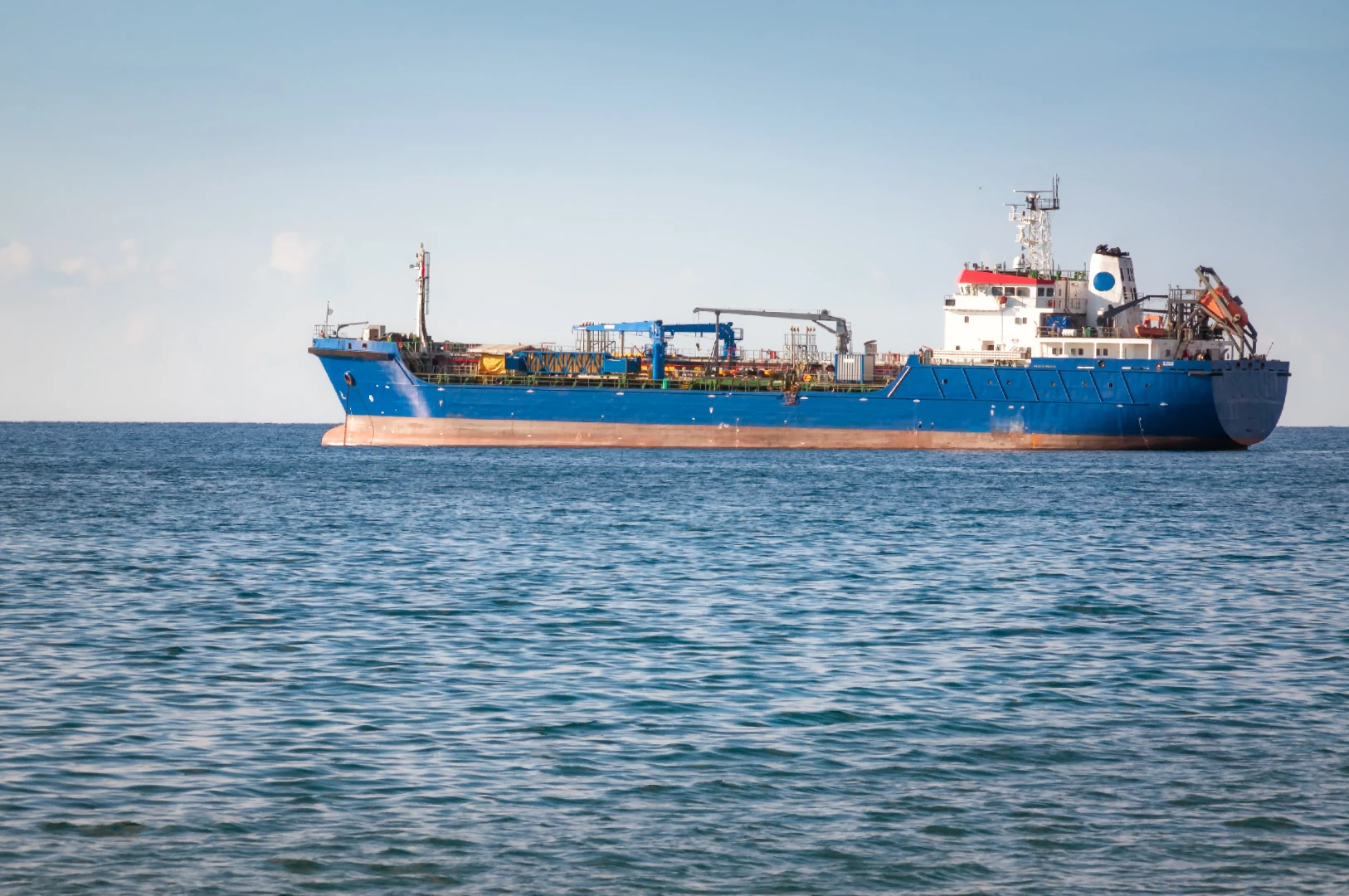
Sea freight is the most economical mode of transport from China to Spain, offering immense physical capacity.
It enables the shipment of oversized machinery and exceptionally heavy bulk cargo.
Furthermore, compared to other transport methods, sea freight demonstrates a higher degree of acceptance for hazardous and sensitive goods.
Ocean Freight Transit Time from China to Spain (Port to Port)
Port of Origin (POL) | Port of Destination (POD) | Port-to-Port Transit Time |
Shenzhen | Valencia | 24-27 Days |
Ningbo | Valencia | 22-26 Days |
Qingdao | Valencia | 27-21 Days |
Guangzhou | Algeciras | 26-30 Days |
Xiamen | Barcelona | 25-30 Days |
Shanghai | Barcelona | 32-35 Days |
Guangzhou | Algeciras | 33-37 Days |
Shenzhen | Algeciras | 20-24 Days |
Major Sea Freight Routes from China to Spain
Sea Freight from Yantian, Shenzhen to Barcelona
Departing from Yantian Port in Shenzhen, the route proceeds into the South China Sea, through the Strait of Malacca, and into the Indian Ocean.
It then traverses the Arabian Sea, the Gulf of Aden, the Red Sea, and the Suez Canal to reach the Mediterranean Sea.
Finally, it sails directly to the Port of Barcelona, Spain, with a transit time of 24 to 30 days. The total distance covered is 8,550 nautical miles.
Sea Freight from Shanghai Yangshan to Valencia
Departing from Shanghai's Yangshan Port, the route traverses the Indian Ocean, rounds the Cape of Good Hope, and enters the Atlantic Ocean.
Heading northward through the Atlantic, the vessel passes the Gulf of Guinea and the Canary Islands en route to the Liberian Peninsula.
It then transits the Strait of Gibraltar into the Mediterranean Sea, sailing along the eastern coast of Spain to the Port of Valencia.
The transit time ranges from 37 to 44 days, covering a total distance of 12,750 nautical miles.
Sea freight from Ningbo-Zhoushan Port to the Port of Algeciras
Departing from Ningbo Zhoushan Port, the route heads southward across the East China Sea, the Taiwan Strait, the South China Sea, and the Strait of Malacca, leading into the Indian Ocean.
Continuing in a southwestward direction, the vessel rounds the Cape of Good Hope off the coast of Africa and enters the Atlantic Ocean.
Sailing northward along the west coast of Africa, the journey proceeds to the Strait of Gibraltar and arrives at the Port of Algeciras in Spain, situated on the northern shore of the strait.
The total distance covers approximately 12,000 nautical miles, with a transit time ranging from 34 to 40 days.
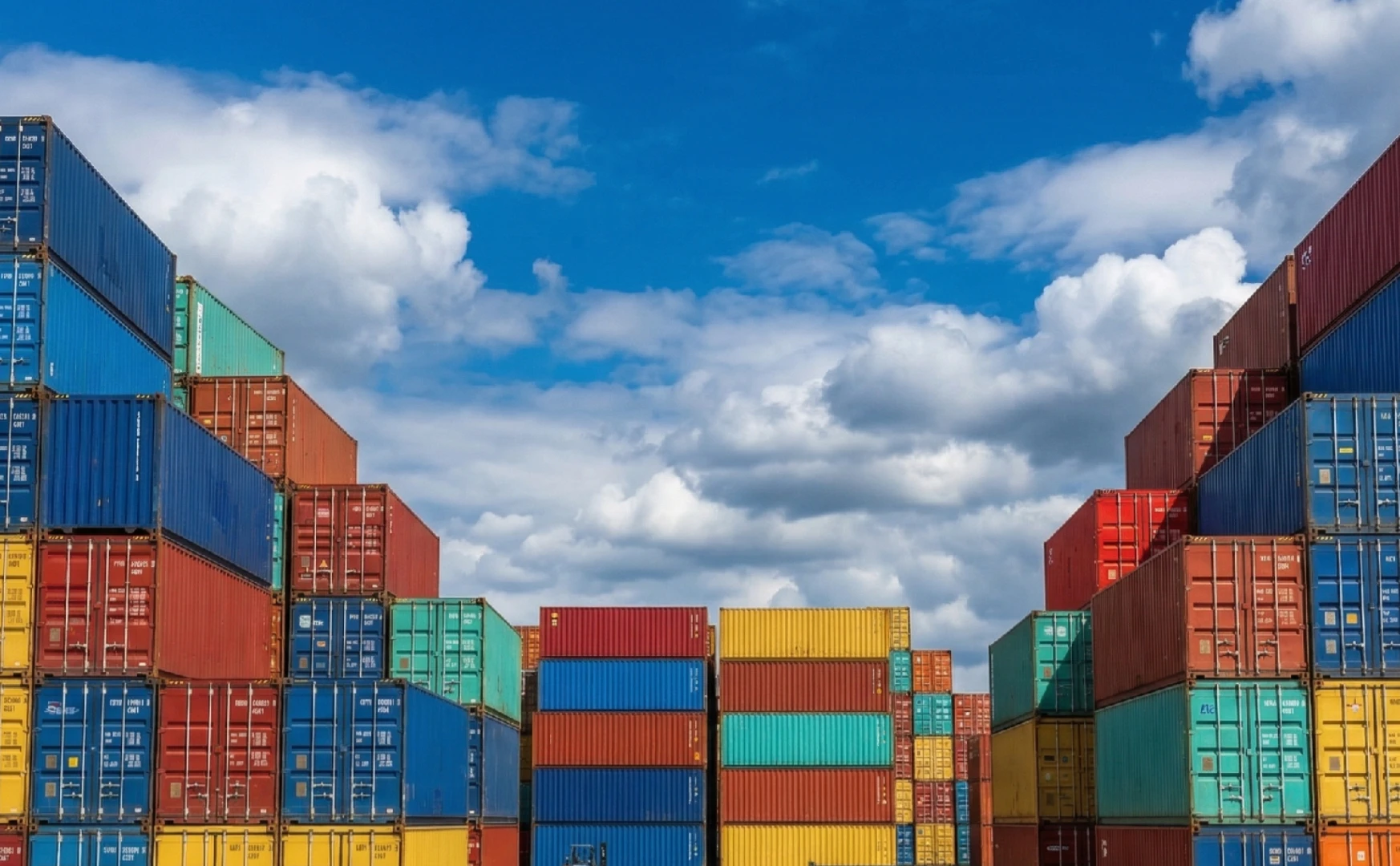
How much does it cost to ship a container from China to Spain by sea?
Sea freight represents the highest-volume mode of transport between China and Spain; understanding the various container types and associated costs can lead to significant savings on shipping fees and enhanced supply chain efficiency.
Container pricing is influenced by factors such as the port of origin, whether the shipment involves a direct route or a transshipment, and the weight of the cargo. The three primary types of containers are as follows:
20GP Container: 6 x 2.3 x 2.4 meters; capacity of 27–28 cubic meters; maximum payload of 26–28 tons.
40GP Container: 12 x 2.3 x 2.4 meters; capacity of 57–58 cubic meters; maximum payload of 26–28 tons.
40HQ Container: 12 x 2.3 x 2.7 meters; capacity of 68 cubic meters; maximum payload of 26–28 tons.
Due to its smaller capacity compared to the 40HQ container, the utilization rate of the 40GP container has declined significantly. In addition to the three types listed above, other available container options include 45HQ containers, reefer containers (refrigerated), open-top containers, and flat-rack containers.
20GP Container Rates from China to Spain (April 2026)
Shenzhen Yantian: $2,355 – $2,565
Guangzhou Nansha: $2,365 – $2,610
Shanghai Yangshan: $2,452 – $2,744
Ningbo Zhoushan: $2,445 – $2,714
Qingdao: $2,578 – $2,843
Xiamen: $2,543 – $2,789
40HQ Container Rates from China to Spain (April 2026)
Shenzhen Yantian: $3,210 – $3,855
Guangzhou Nansha: $3,210 – $3,855
Shanghai Yangshan: $3,456 – $3,934
Ningbo Zhoushan: $3,491 – $3,950
Tianjin: $3,632 – $4,010
Fuzhou: $3,560 – $3,994
There are several common Incoterms adopted by buyers for sea freight from China to Spain.
FOB
The buyer is responsible for ocean freight costs, as well as customs clearance and tax payments in Spain.
The seller is responsible for cargo pickup within China, transport to the port, export customs clearance, and local charges at the port of origin
.
Once the logistics provider safely loads the cargo onto the vessel, the risk transfers from the seller to the buyer, and the transaction for this shipment is considered complete.
CIF
The buyer is responsible for miscellaneous charges at the destination port, customs clearance and tax payments in Spain, and last-mile delivery.
The seller is responsible for all steps covered under the FOB terms, plus the cost of ocean freight and insurance.
Once the logistics provider safely delivers the cargo to the destination port, the risk transfers to the buyer.
DAP
The seller is responsible for handling import customs clearance procedures, paying applicable taxes and duties, and unloading the cargo at the destination.
The buyer is responsible for all steps covered under the CIF terms, plus miscellaneous charges at the destination port and inland transport to the buyer's designated warehouse.
Once the logistics provider safely delivers the cargo to the buyer's designated warehouse, the risk transfers to the buyer.
Any damage to the cargo resulting from the unloading of containers from the vessel shall be borne by the buyer.
Under DAP terms, if the buyer uses their own company to handle customs clearance and tax payments, they may be eligible to claim tax rebates.
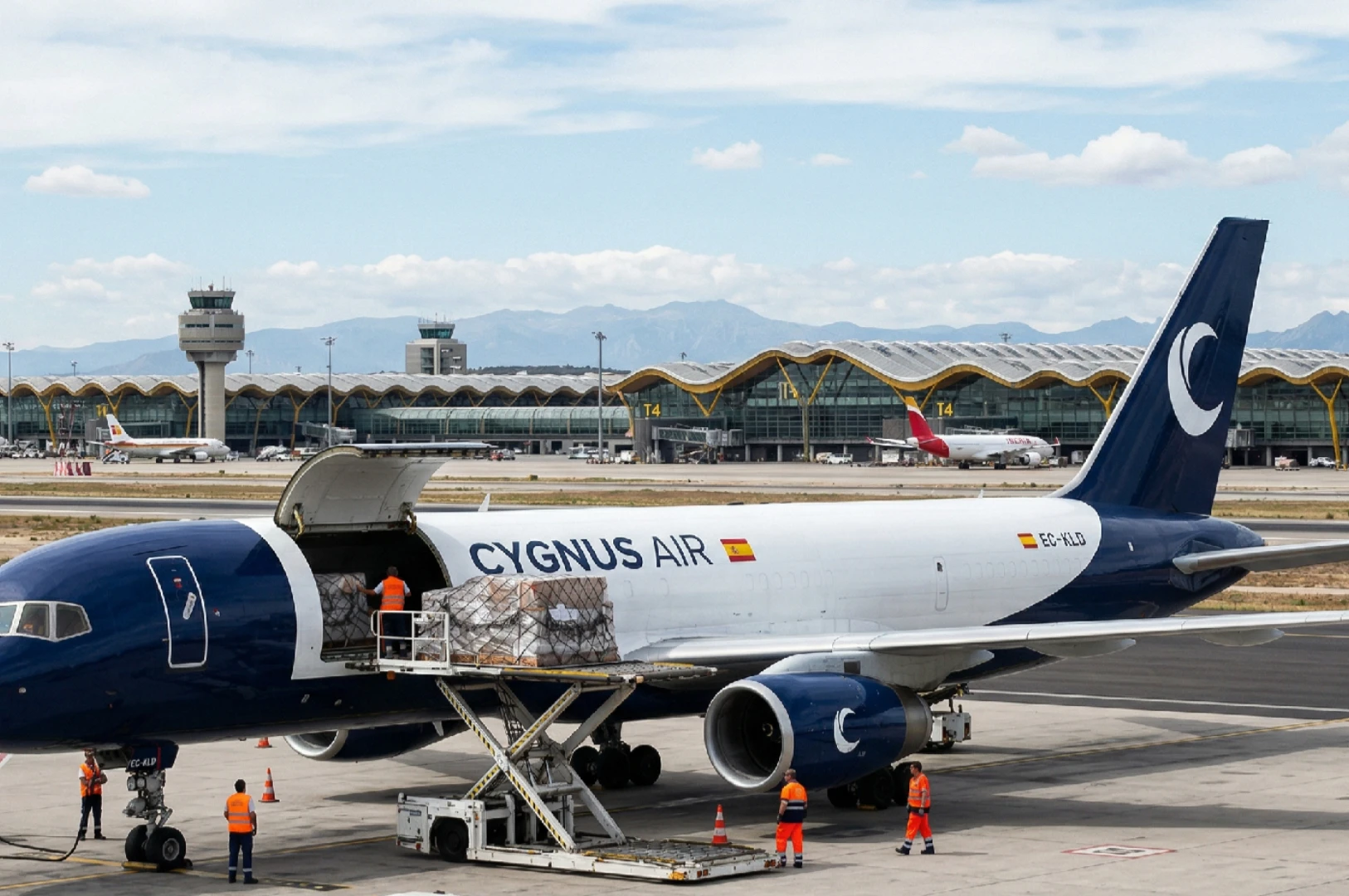
Air Freight from China to Spain
Air freight is the fastest—though also the most expensive—method for shipping goods from China to Spain. It is ideally suited for transporting high-value cargo and shipments with strict time-sensitivity requirements—such as critical factory components, urgent documents, and test samples.
How long does air freight take from China to Spain? (Airport-to-Airport)
From Airport of Departure to Airport of Destination | Transit Time |
Air Freight from Beijing (PEK/PKX) to Madrid(MAD) | 1–2 Days (Direct Route) |
Air freight from Shanghai (PVG) to Madrid(MAD) | 1–3 Days (Direct Route) |
Air Freight from Guangzhou (CAN) to Madrid(MAD) | 3–5 Days (With Transit) |
Air freight from Hong Kong (HKG) to Madrid(MAD) | 3–5 Days (With Transit) |
Air Freight from Shenzhen (SZX) to Barcelona(BCN) | 2–4 Days (Some via transit) |
Air Freight from Shanghai (PVG) to Barcelona (BCN) | 3–5 Days (Via Europe) |
Air Freight from Hong Kong (HKG) to Zaragoza (ZAZ) | 1–3 Days (Direct Route) |
The volumetric weight for air freight is calculated using the formula: Length × Width × Height ÷ 6000 (in centimeters). Note that some airlines may use a divisor of 5000 or a different value; this corresponds to a standard conversion rate of 167 kilograms per cubic meter.
For air cargo, the chargeable weight is determined by comparing the actual gross weight against the volumetric weight. If the volumetric weight exceeds the actual weight, the volumetric weight is applied; conversely, if the volumetric weight is lower, the actual weight is used.
Major Air Freight Routes from China to Spain
From Beijing to Madrid (Direct Route)
Direct flight from Beijing to Spain's Barajas Airport.
Distance: Approximately 9,200 km. Transit Time: 1–2 days. Primary Carrier: Air China (CA).
From Guangzhou to Barcelona (via the Middle East)
Flight from Guangzhou to a Middle Eastern hub (such as Doha or Dubai). Cargo is transferred to a connecting flight and ultimately flown to El Prat Airport.
Total Distance: Over 10,800 km. Transit Time: 3–5 days. Primary Carriers: Qatar Airways (QR) or Emirates (EK).
From Shanghai to Barcelona (Via Europe)
Flight from Shanghai to a major European aviation hub (such as Frankfurt).
Cargo undergoes customs clearance and bonded processing at this hub, then is transported via customs-supervised truck to Barcelona Airport.
Total Distance: Approximately 10,200 km. Transit Time: 4–6 days. Primary Carriers: Lufthansa (LH) or Air France (AF).
Air Freight Costs from China to Spain (April 2026)
When the cargo volume is greater than or equal to 1,000 kilograms
From Beijing (PEK) to Madrid: $3.71–$4.05 per kg
From Shanghai (PVG) to Madrid: $3.85–$4.15 per kg
From Shanghai (PVG) to Barcelona: $3.82–$4.11 per kg
From Guangzhou (CAN) to Madrid: $3.85–$4.15 per kg
From Shenzhen (SZX) to Barcelona (BCN): $3.92–$4.25 per kg
From Hong Kong (HKG) to Zaragoza (ZAZ): $4.15–$4.73 per kg
Get the latest quote for your cargo.
In addition to the basic freight charges, you may also be subject to the following fees:
Fuel Surcharge (FSC)
Security Surcharge (SSC)
Customs Inspection Fees
Air Cargo Terminal Storage Fees (incurred due to delays in customs clearance)
Special Cargo Surcharges (for shipments containing batteries, liquids, or oversized/overweight items)
Peak Season Surcharges
Common Trade Agreements Used by Spanish Importers for Air Freight from China
EXW
The buyer is responsible for picking up the goods from the logistics provider, export customs clearance, airport charges at the point of departure, air freight charges, customs clearance and tax payment in Spain, and trucking to the destination.
The seller is responsible for standardizing the packaging of the goods and handing them over to the buyer’s designated agent at the specified factory or warehouse.
Risk transfers once the goods are safely delivered to the importer’s designated agent; this is the trade agreement with the lowest risk for the seller.
The buyer essentially controls the entire logistics chain and can further reduce logistics costs by comparing prices.
FCA
The buyer is responsible for terminal charges at the Chinese airport of departure, air freight charges, customs clearance, and tax payment in Spain, as well as pickup and final delivery.
The seller is responsible for packaging the goods, safely transporting them to the buyer’s designated cargo terminal at a Chinese airport, and handling Chinese export customs clearance and related fees.
Risk transfers upon safe delivery of the goods to the importer’s designated carrier. Importers using this agreement typically have extensive experience importing from China.
DDP
The buyer is responsible for receiving the goods at the designated destination.
The seller is responsible for the entire transportation process, including pickup, shipping, export customs clearance, Spanish customs clearance, tax payment, and delivery to the buyer’s designated destination.
Risk transfers upon the buyer’s confirmation of receipt and acceptance of the goods. This is the trade agreement with the highest risk for the seller and is suitable for small and medium-sized enterprises (SME) importing from China for the first time.
Rail Freight from China to Spain
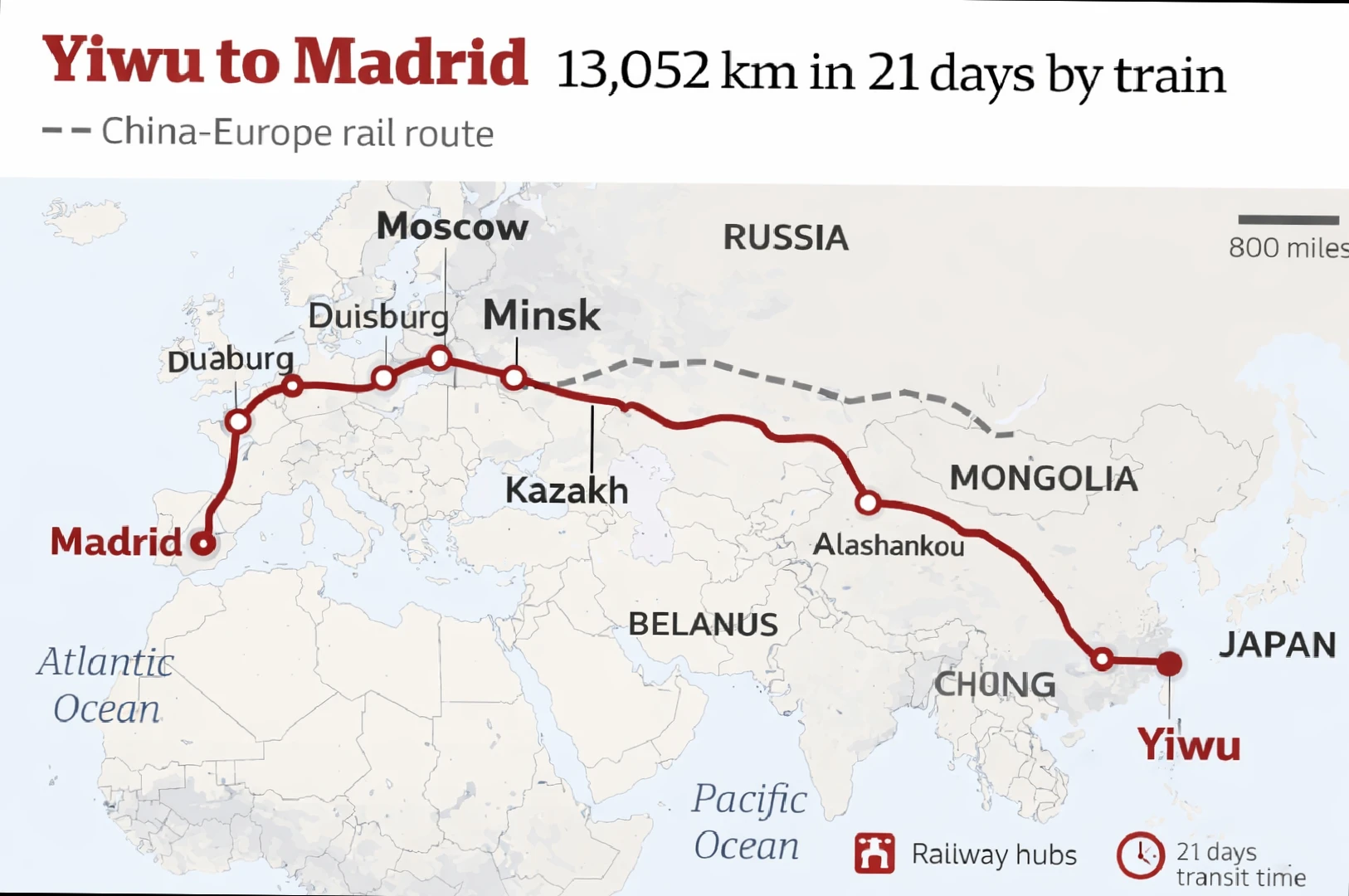
The value of goods imported by Spain from China via rail transport stands at approximately 1.6 to 2 billion. The most pivotal route is the line connecting Yiwu to Madrid.
The transit time for this route is approximately 21 to 24 days, spanning a total distance of about 13,000 kilometers across eight countries.
Furthermore, established rail routes also exist from Xi'an, Chengdu, Chongqing, Zhengzhou, and Wuhan, facilitating transport to Spain.
Express Shipping from China to Spain
Express shipping is ideally suited for transporting high-value, time-sensitive, and lightweight cargo. Examples of situations where this service is appropriate include:
Production stoppages at a Spanish factory were caused by missing critical components from China.
Urgent business documents;
Sample testing is required before a major client order.
Urgent replenishment of market inventory.
Express carriers also impose specific requirements regarding cargo weight and dimensions; shipments that are oversized or overweight are subject to additional surcharges.
Express shipping operates on a DDP (Delivered Duty Paid) door-to-door basis, meaning the fees you pay cover every stage of the transportation process. You simply need to wait to receive your shipment.
For specific categories of goods—such as liquids, batteries, powders, and branded merchandise—shipment is typically arranged via specialized charter flights departing from Hong Kong.

Door to Door Freight from China to Spain
Door-to-door shipping from China to Spain offers great convenience for buyers, as it eliminates the need to navigate complex logistics chains. This allows them to focus their efforts on marketing and sales.
This shipping method is well-suited for individual buyers, small-batch shipments, startups, and businesses looking to streamline their logistics operations.
Quotes for door-to-door shipping tend to be higher because logistics providers factor in a reserve amount to cover potential hidden risks—such as congestion at the destination port, labor strikes, customs inspections, and currency exchange rate fluctuations.
If you have extensive experience importing goods from China and have arranged door-to-door shipments with multiple suppliers on numerous occasions, you are likely very familiar with this mode of transportation and have a clear understanding of current market rates.
If you lack experience with door-to-door shipping or are importing from China for the first time, be sure to compare quotes from different suppliers, communicate with them to gather industry insights, and verify their credentials and years in business—reliable freight forwarders typically have been in operation for many years. These steps will help reduce your door-to-door shipping costs and minimize risks.

Customs Clearance in Spain
Standard Documents for Spanish Customs Clearance
Commercial Invoice
This serves as proof of the goods' value, provided by the supplier to the importer, and constitutes a crucial basis for the assessment of duties and taxes.
It includes information such as the name of the goods, quantity, total price, HS Code, etc.
The content must be accurate and clearly presented.
Packing List
This document itemizes details regarding the packaging method, quantity, weight, and volume of each item. It facilitates the verification of cargo details during customs inspection.
For special cargo—such as used machinery—additional documentation is required, including photographs of the equipment's exterior and images of the nameplates/identification tags.
Bill of Lading (B/L)
This serves as the document of title for the goods, certifying that the cargo has been loaded onto the vessel and is ready for transport.
It contains information regarding the name of the goods, weight, quantity, mode of transport, etc.
It is an essential document for import customs clearance.
Certificate of Origin
This document certifies the country where the goods were manufactured and serves as a key basis for qualifying for preferential tariff treatment.
Trade Contract
This is the agreement executed between the buyer and the seller; it must comply with Spanish laws as well as international trade practices.
Other Potentially Required Documents and Specialized Certificates
Sanitary/Phytosanitary Certificate: For imported food products, animals, plants, and their derivatives, this certificate verifies compliance with Spain's health and safety standards.
Import/Export License: This document certifies that certain restricted goods (e.g., pharmaceuticals, chemicals) comply with Spain's import policies and regulatory standards.
CE Certification: A mandatory certification for specific product categories, verifying compliance with the European Union's safety, health, and environmental protection standards.
Certificate of Analysis: Typically required for chemical products and similar goods, this document certifies the composition and quality of the cargo.
Product Manual/Instructions: Particularly relevant for machinery and equipment, this document provides detailed operating instructions and maintenance guidelines.

Import Duties and Taxes in Spain
The most common charges incurred when importing goods into Spain are customs duties and Value Added Tax (VAT).
Customs Duties: Calculated based on the CIF value of the goods (Cost + Freight + Insurance), these duties typically range from 0% to 17%.
Certain products—such as smartphones—benefit from preferential policies that exempt them from customs duties (0% duty rate).
Value Added Tax (VAT): The standard VAT rate in Spain is 21%; however, reduced rates apply to certain food products and daily necessities.
Anti-Dumping Duties: To protect domestic industries, Spain imposes anti-dumping duties on specific imported goods—for instance, electric bicycles from China, as well as certain steel and ceramic products. These duty rates are generally quite high, averaging between 30% and 60%.
Excise Duties: Primarily levied on alcohol and tobacco products, these are volume-based taxes. Consequently, the higher the quantity of goods imported, the higher the total tax liability.
Tax Rates on Common Goods Imported from China to Spain
Product Category | tariff | VAT |
Electronic Products | 0% - 2.3% | 21% |
Industrial Machinery | 0% - 3.6% | 21% |
Textiles and Clothing | 8% - 13% | 21% |
Children's Products and Sports Equipment | 0% - 4.6% | 21% |
Home and Household Goods | 0% - 6% | 21% |
Automotive Parts and Accessories | 3% - 4.6% | 21% |
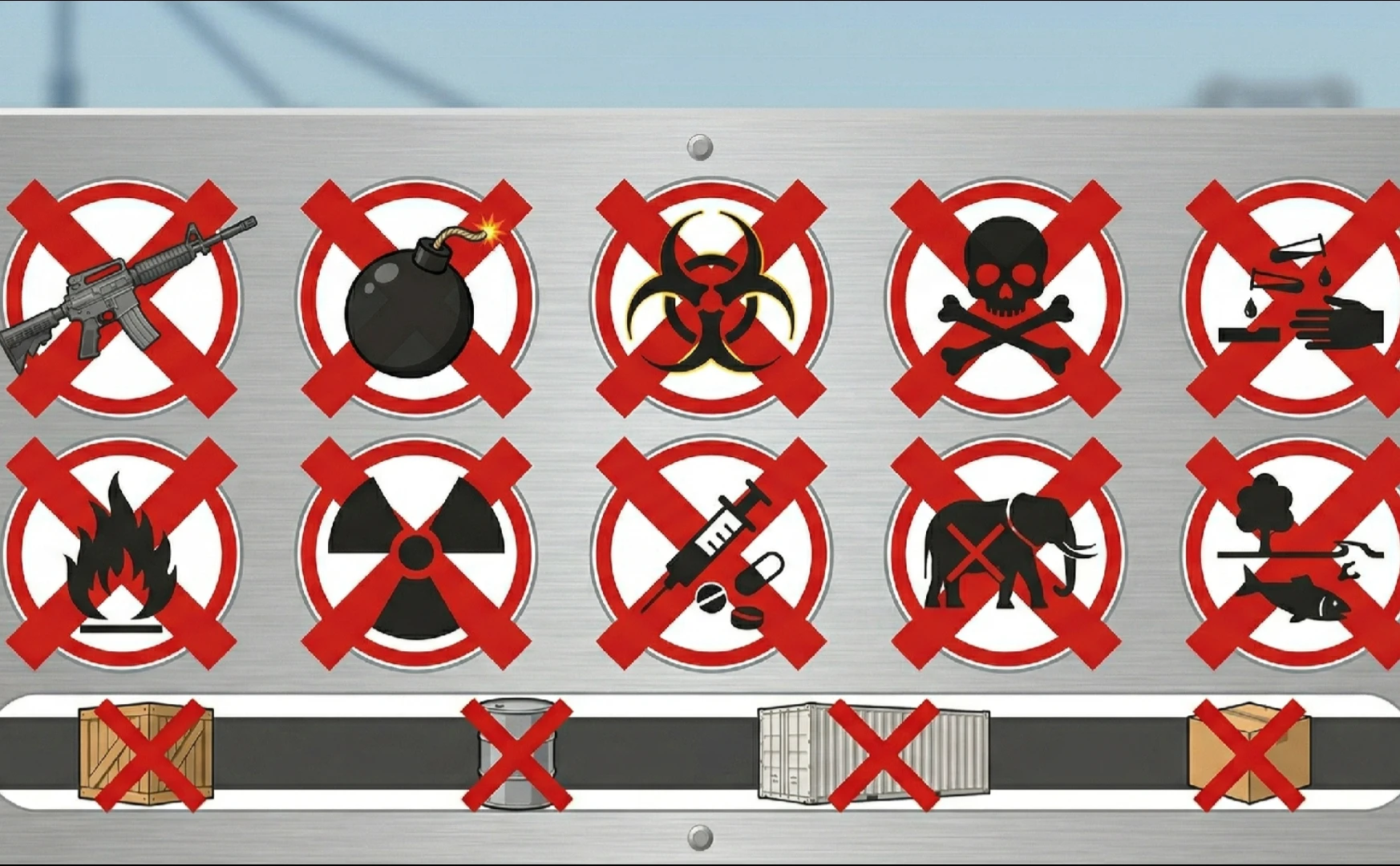
Products Restricted or Prohibited from Import into Spain
Familiarize yourself with prohibited and restricted import products to avoid the unintended shipment of such goods—thereby preventing cargo detention, hefty fines, and placement on the import blacklist.
Prohibited Import Products
Prohibited Drugs and Narcotics
Firearms, Weapons, and Explosives
Counterfeit and Pirated Goods
Endangered Species and Their Products
Obscene or Subversive Publications
Prohibited Meat Products
Asbestos Products
Specific Chlorofluorocarbons (CFCs)
Sandalwood/Rosewood Logs and Furniture
Products Containing Persistent Organic Pollutants (POPs)
Restricted Products
Live Animals and Plants
Prescription Drugs and Medical Devices
Tobacco and Alcohol Products
Cultural Relics and Artworks
Second-hand Goods
Cash
Hydrogen and Certain Chemical Products
Cement and Fertilizers
Cocoa and Palm Oil

Transporting Goods from China to Spain Using Temperature-Controlled Containers
Certain types of cargo are subject to strict temperature requirements; prolonged exposure to temperatures outside of the required range can lead to spoilage, loss of active ingredient efficacy, accelerated aging, and other detrimental issues.
There are primarily three types of temperature-controlled shipping containers: deep-freeze containers, fresh-cargo containers, and constant-temperature containers.
Deep-freeze containers are primarily used to transport frozen goods—such as frozen meat, chicken feet, and seafood—at temperatures typically maintained below -18°C.
Fresh-cargo containers are mainly utilized for transporting produce, dairy products, and similar items, with temperatures maintained in the range of approximately -6°C to 0°C.
Constant-temperature containers are primarily used for transporting sensitive goods—such as wine and pharmaceutical preparations—at temperatures maintained within a range of approximately 14°C to 25°C.
When loading temperature-controlled containers, it is imperative to ensure that the air circulation channels remain unobstructed; this guarantees proper airflow within the container, allowing the internal temperature to reach and maintain the designated set point.
Temperature-controlled containers ensure the safe transport of cargo, even when exposed to extreme temperature fluctuations in the external environment.
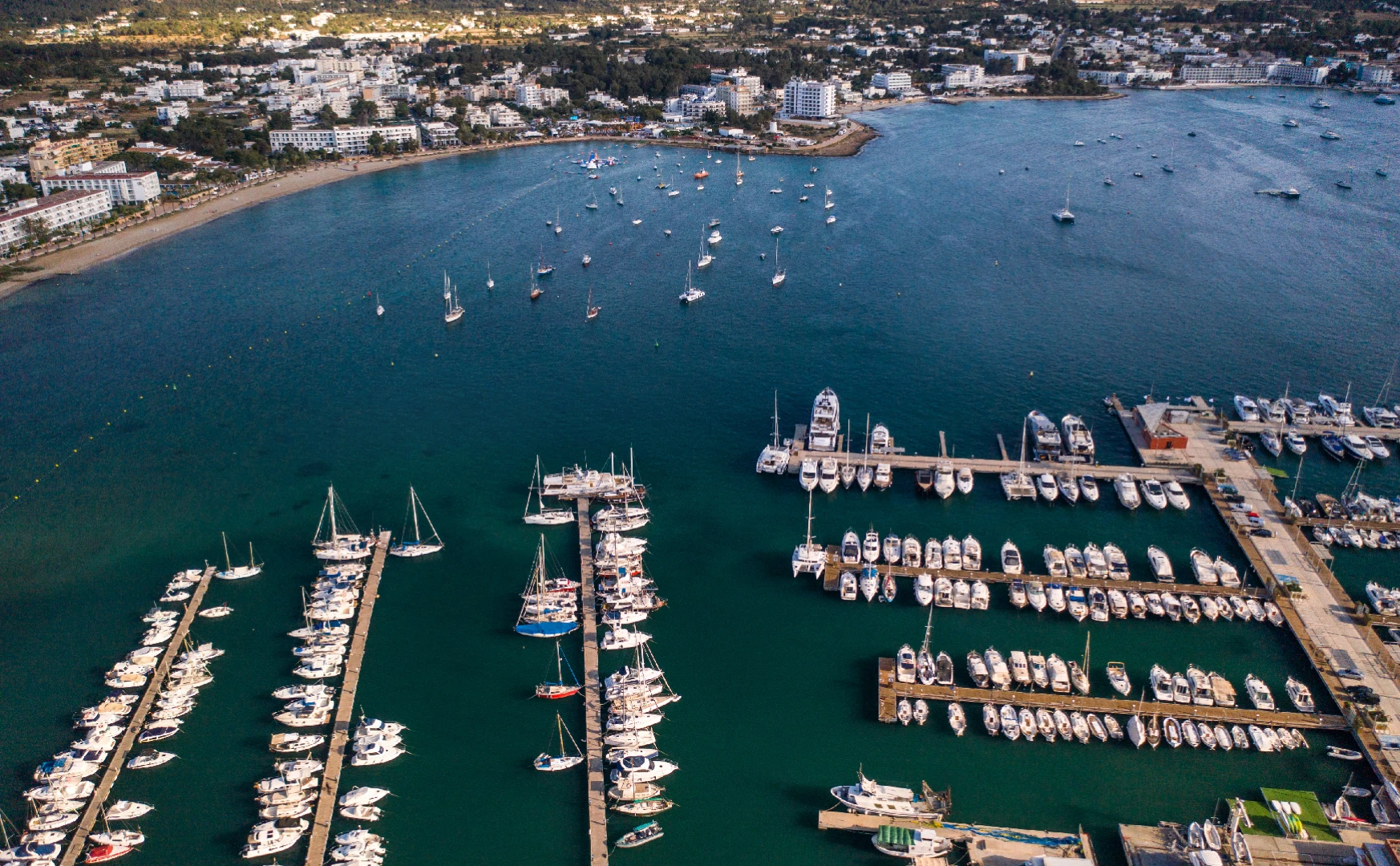
Shipping from China to Major Ports and Airports in Spain
Understanding the specific characteristics and geographical locations of major airports and seaports in China and Spain enables you to clearly select the most suitable transport routes and prepare effective contingency plans.
Major Ports and Airports in Spain
Port of Valencia
Located on Spain's eastern coast, this port boasts a high cargo throughput and highly efficient customs clearance procedures. It is an ideal choice for clients whose cargo is destined for Valencia or Madrid.
Port of Barcelona
Situated in northeastern Spain, this port is closely integrated with European rail logistics networks and features a well-established bonded zone. It is best suited for clients whose cargo is destined for Barcelona, Zaragoza, or cities located near the south of France.
Port of Algeciras
Located at the southernmost tip of Spain, this port features deep-water drafts and primarily handles transshipment cargo. It is an excellent option for clients whose cargo is destined for Seville, Málaga, Cádiz, or cities in the southern regions of Portugal.
Barajas Airport
Spain's largest comprehensive aviation hub is centrally located within the country. It serves as the preferred destination for e-commerce parcels, enabling delivery to all parts of Spain within 1–2 days.
El Prat Airport
Spain's second-largest comprehensive airport is situated on the northeastern coast of the country. Located in close proximity to the Port of Barcelona, it serves as a gateway to most of the Catalonia region, northern Valencia, Zaragoza, and various Southern European nations.
Zaragoza Airport
A specialized cargo airport in Spain, located in the country's northern interior. It is strategically positioned at the nexus of four major urban centers: Madrid, Barcelona, Valencia, and Bilbao. The airport is distinguished by its highly efficient customs clearance and ground handling operations.
Major Ports and Airports in China
Port of Shenzhen
Situated in the hinterland of the Pearl River Delta, this port boasts the highest frequency of direct sailings to Spain and offers exceptional operational efficiency. Its service network extends to and serves the surrounding cities within the Pearl River Delta region.
Port of Shanghai
Located at the mouth of the Yangtze River, it holds the distinction of having the highest cargo throughput in the world. The port features an extensive and dense network of shipping routes connecting China to Spain, with a service reach that extends to cities across Jiangsu, Zhejiang, and Anhui provinces.
Port of Ningbo-Zhoushan
Positioned on the southern flank of the Yangtze River Delta, this port benefits from deep-water channels suitable for large vessels. It possesses a highly developed sea-rail intermodal transport network, providing comprehensive coverage across the entire province of Zhejiang, as well as serving landlocked regions such as Jiangxi and Hubei.
Shanghai Pudong International Airport (PVG)
China's largest air cargo hub is situated along the eastern coast of Shanghai. It offers the highest frequency of flights bound for Spain, serving as a primary transit center for the transportation of high-value and time-critical cargo.
Guangzhou Baiyun International Airport (CAN)
Located in Guangzhou, South China, this airport stands as the region's most comprehensive aviation hub. It handles a massive volume of shipments, including e-commerce parcels, light industrial products, and consumer electronics, with a service radius that encompasses the entire province of Guangdong.
Shenzhen Bao'an International Airport (SZX)
Situated on the eastern bank of the Pearl River Estuary, this airport specializes in the transportation of a vast array of electronic products and components, serving as a key logistics gateway for the cities of Shenzhen, Dongguan, and Huizhou.
How can costs be saved when shipping from China to Spain?
Minimizing shipping costs from China to Spain as much as possible ensures the maximization of your profits.
Partner with a reliable and reasonably priced supplier; after all, no one wants to receive substandard goods or shipments with discrepancies in quantity.
Compare multiple logistics providers to select one that is reliable, suitable for your needs, and offers a quote that aligns with your target budget. A dependable logistics provider will go the extra mile to assist with your shipments—and offer preferential rates—in the interest of fostering a long-term partnership.
Prioritize ports and logistics hubs located closest to your cargo's origin to minimize long-distance trucking costs.
Require your supplier to package goods in compliance with shipping regulations to avoid incurring additional costs for repackaging that may be necessary to meet transport requirements.
Utilize a consolidated shipping warehouse in China to consolidate your cargo, thereby reducing the total number of boxes and the overall shipment volume.
Avoid shipping during peak seasons; ideally, opt for the off-season instead. Not only are rates lower and cargo space more readily available during these periods, but the shipping process also proceeds more smoothly—making it an ideal time to replenish inventory in advance of the upcoming sales season.
Shipping from China to Spain: Frequently Asked Questions
1. What happens if my goods are damaged or lost?
If your goods are lost or damaged, we will provide compensation in accordance with the terms of our signed agreement (please note that compensation for damage is contingent upon the packaging meeting standard shipping requirements).
For high-value and fragile items, we strongly recommend purchasing insurance. This ensures that, in the event of an unforeseen incident, you will be fully compensated for the value of your goods.
We also arrange for insurance coverage for your cargo during the domestic transit phase within China.
2. How long does it take to ship goods from China to Spain?
Direct sea freight to Spanish ports takes approximately 30–35 days; if transshipment is required, the journey will be extended by an additional 7–10 days.
Air freight (airport-to-airport) takes 1–2 days; including customs clearance and local delivery time, the entire process takes a total of 5–7 days.
Rail transport takes approximately 24–28 days.
3. Can I track the status of my shipment?
Yes, our specialists will provide you with real-time updates on key milestones throughout the shipping process and respond promptly to any inquiries you may have.
4. Can you transport liquids, chemical products, or batteries?
Yes, we can transport compliant products within these categories; however, you must provide the relevant regulatory documentation—such as an MSDS (Material Safety Data Sheet), a Transport Identification Report, UN 38.3 test reports, etc.
5. Do you offer "Double Clearance" (customs clearance at both ends) and tax-inclusive shipping services from China to Spain?
Yes, we offer DDP (Delivered Duty Paid) services via sea, air, and rail freight from China to Spain. This service includes door-to-door delivery to most regions within Spain, allowing us to deliver directly to your designated warehouse. We also provide Amazon FBA first-mile shipping services.
In Conclusion
If you have read this far, you likely have a better understanding of shipping from China to Spain. This article has addressed the various complexities and potential challenges you might encounter when transporting goods from China to Spain.
Are you now ready to try shipping goods from China, or are you looking for a reliable Chinese freight forwarder?
VIPUTRANS is your trusted logistics partner.
With years of experience in freight forwarding, we have a proven track record of ensuring safe and punctual deliveries throughout Europe. We take every opportunity to serve our clients with the utmost dedication and professionalism.
Contact us today to receive a quick quote and start benefiting from high-quality logistics services that optimize your supply chain and reduce costs.