



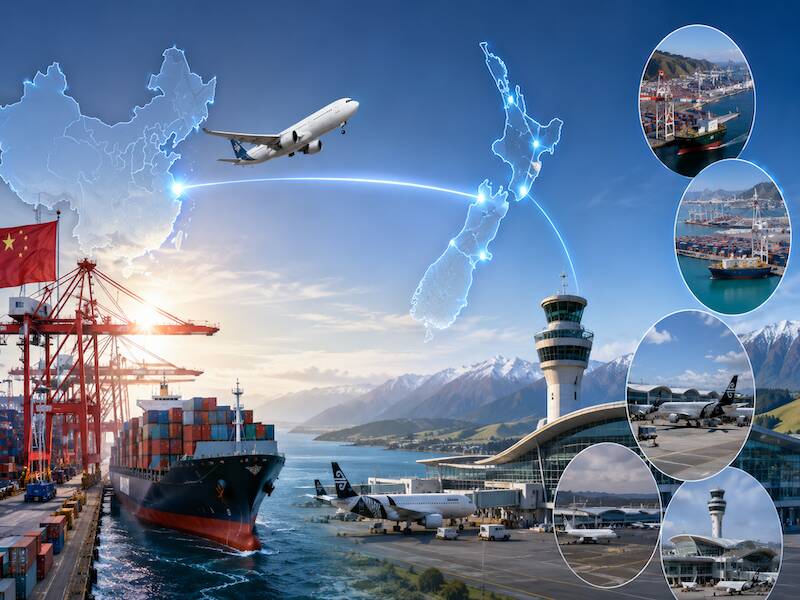
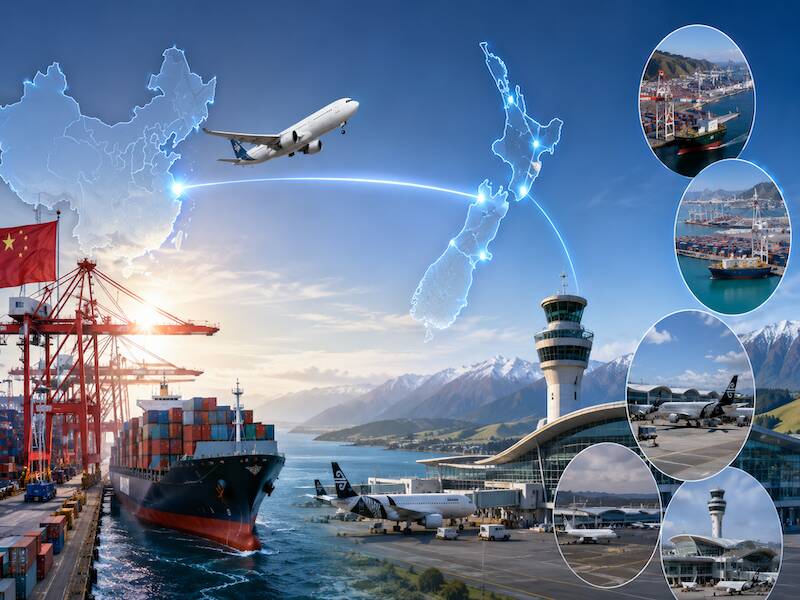
2026 Guide to Shipping from China to New Zealand: Rates, Transit Times, and Shipping Methods
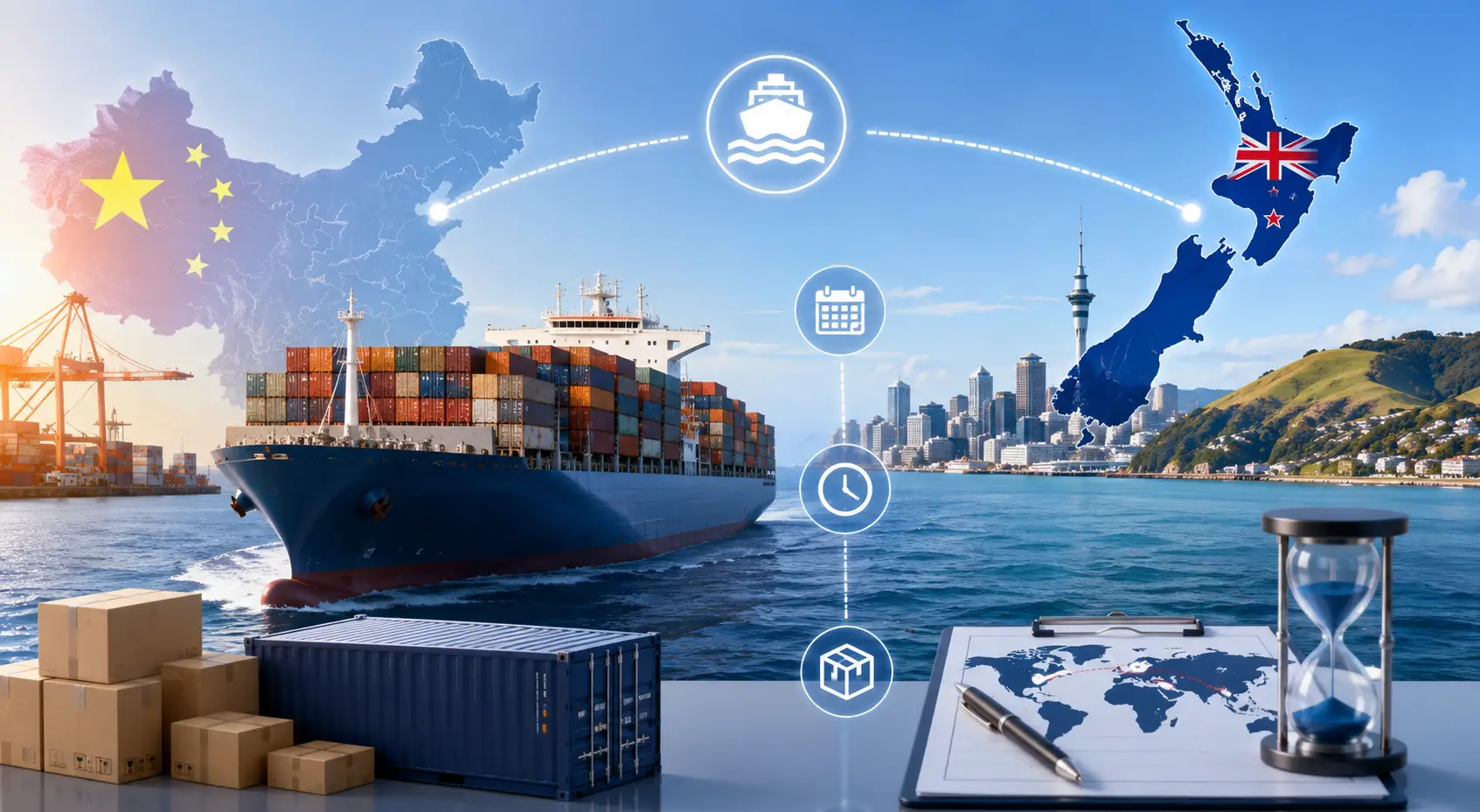
For many years, VIPTRANS has specialized in shipping routes from China to New Zealand. We not only serve major cargo hubs—such as Auckland, Tauranga, and Christchurch—but also possess specialized shipping solutions and extensive practical experience for hard-to-reach destinations, including Greymouth, Gisborne, Queenstown, and offshore territories (such as Waiheke Island and the Chatham Islands).
As a Chinese freight forwarder holding NVOCC accreditation, VIPTRANS maintains long-standing partnerships with carriers, enabling us to secure highly competitive rates for both sea and air freight.
We are experts in China-to-New Zealand logistics, dedicated to providing you with the finest freight services and serving as your reliable partner in China.
Shipping from China to New Zealand: Our Shipping Methods
Sea Freight from China to nz
We provide ocean freight services from ports across China to various destinations in New Zealand, including Auckland and Tauranga. We offer competitive pricing and maintain stable cargo space availability, even during peak seasons.
air freight from china to nz
We optimize the packaging of your goods for maximum cost-efficiency, and—based on a comprehensive assessment of cargo type, budget, transit time requirements, and other factors—we select the optimal shipping route and flight.
Shipping from China to New Zealand: Our Services
Procurement of Goods
Pickup from Suppliers
Free Warehousing Services in China
Cargo Consolidation and Repackaging to Minimize Volume and Ensure Compliance with International Shipping Standards
Labeling for E-commerce Goods; Cargo Reinforcement (e.g., Wooden Crating and Boxing)
Video and Photo Reporting of Cargo
Quality and Quantity Inspection
Complimentary Cargo Insurance
Customs Clearance Agency and Assistance
DDP (Delivered Duty Paid) Door-to-Door Shipping Service from China to New Zealand, Including Customs Clearance and Taxes
2026 Shipping time from China to NZ
Destination City | Sea Freight | Air Freight | International Express |
Auckland | 15–21 days | 3–5 days | 3–4 days |
Wellington | 20–26 days | 4–6 days | 4–5 days |
Tauranga | 18–24 days | 4–6 days | 4–5 days |
Christchurch | 26–33 days | 4–6 days | 4–6 days |
Common Factors Affecting Transit Time
Selection of Transport Mode
Port Congestion
Customs Inspection
Extreme Weather
China to NZ Sea Freight
Sea freight is the primary and most cost-effective mode of transport from China to New Zealand, making it suitable for shipping large-volume, heavy, low-value cargo that does not require urgent delivery.
Sea Freight Costs from China to New Zealand (May 27, 2026)
Shipping Options | Cost(Auckland) | Cost(Wellington) | Suitable Cargo Types |
Sea Freight LCL | 35-75USD/CBM | 40-80USD/CBM | Cargo volumes of 1–15 cubic meters; small to medium-sized orders. |
Cost of shipping container from China to New Zealand (20GP) | 1150-1850USD | 1350-2000USD | Bulk trade cargo, international household moves, shipments sufficient to fill a full container, and cargo requiring the exclusive use of a dedicated container. |
Cost of shipping container from China to New Zealand (40HQ) | 2300-3000USD | 2600-3200USD |
Routes and Markets
Freight Rates: Freight rates on the ANZ route remain stable in May.y; major shipping lines are set to increase freight rates in mid-June, so major buyers should take advantage of May’s rates.
Space Availability: General cargo space is stable, with no risk of container rejection. However, reefer and dangerous goods space still requires booking 10–15 days in advance.
Surcharges: As of 1 May, the reefer container surcharge is US$400 per TEU; there are currently no additional congestion charges at the Port of Auckland.
Note: New Zealand implemented a new cargo levy system on 1 April
Air freight from China to NZ
The air freight route between China and New Zealand serves as a vital trade artery for both nations, ideally suited for the transport of urgent and high-value cargo. However, effectively managing overall costs—amidst seasonal fluctuations, volatile fuel prices, and local logistics challenges—is the key to achieving success in the New Zealand market.
Air freight costs from China to New Zealand(May 27, 2026)
Air Freight (Direct Flight) | Price | Transit Time |
Under 45 kg | 6.8-7.5$/kg | 3–5 days |
45-100kg | 5.5-6.2$/kg | 3–5 days |
100-300kg | 4.8-5.3$/kg | 3–5 days |
300-500kg | 4.2-4.7$/kg | 3–5 days |
1000kg | 4.2-4.4$/kg | 3–5 days |
Market Characteristics
Elevated Freight Rates: Fluctuations in crude oil prices have led to a slight increase in fuel surcharges, while a surge in e-commerce shipments has saturated cargo hold capacity, resulting in a 10–20% rise in base freight rates.
Capacity Structure: Air cargo operations are primarily driven by dedicated freighters departing from South China, serving as the main transport channel for e-commerce goods, heavy cargo, and shipments containing lithium batteries. Commercial cargo capacity on passenger aircraft remains limited.
Customs Inspection: New Zealand Customs maintains strict scrutiny over shipments containing lithium batteries or utilizing wooden packaging; therefore, it is imperative to ensure that all documentation is complete, accurate, and consistent to avoid delays in customs clearance.
Air Freight Considerations for Various Cargo Types
Products Containing Batteries
Mobile phones, computers, power banks, Bluetooth headphones
Important Notes: You must provide a UN38.3 test report and an MSDS (Material Safety Data Sheet). Batteries must be packaged separately, and the capacity of each individual battery must not exceed 100 Wh. The packaging must display a lithium battery warning label.
Sensitive Goods
Cosmetics, food products, health supplements, and tea
Important Notes: You must confirm in advance with your freight forwarder whether the items are importable. You are required to provide a complete list of product ingredients and relevant inspection reports. Food products must comply with New Zealand's sanitary standards.
Oversized and Overweight Cargo
Individual pieces exceeding 150 kg in weight, or with dimensions exceeding 120 cm × 80 cm × 80 cm
Important Notes: Confirm shipping feasibility with your freight forwarder and verify all associated costs (including additional overweight surcharges). Secure cargo space and confirm the airline's handling capabilities in advance.
Air Freight Considerations for Various Cargo Types
Products Containing Batteries
Mobile phones, computers, power banks, Bluetooth headphones
Important Notes: You must provide a UN38.3 test report and an MSDS (Material Safety Data Sheet). Batteries must be packaged separately, and the capacity of each individual battery must not exceed 100 Wh. The packaging must display a lithium battery warning label.
Sensitive Goods
Cosmetics, food products, health supplements, and tea
Important Notes: You must confirm in advance with your freight forwarder whether the items are importable. You are required to provide a complete list of product ingredients and relevant inspection reports. Food products must comply with New Zealand's sanitary standards.
Oversized and Overweight Cargo
Individual pieces exceeding 150 kg in weight, or with dimensions exceeding 120 cm × 80 cm × 80 cm
Important Notes: Confirm shipping feasibility with your freight forwarder and verify all associated costs (including additional overweight surcharges). Secure cargo space and confirm the airline's handling capabilities in advance.
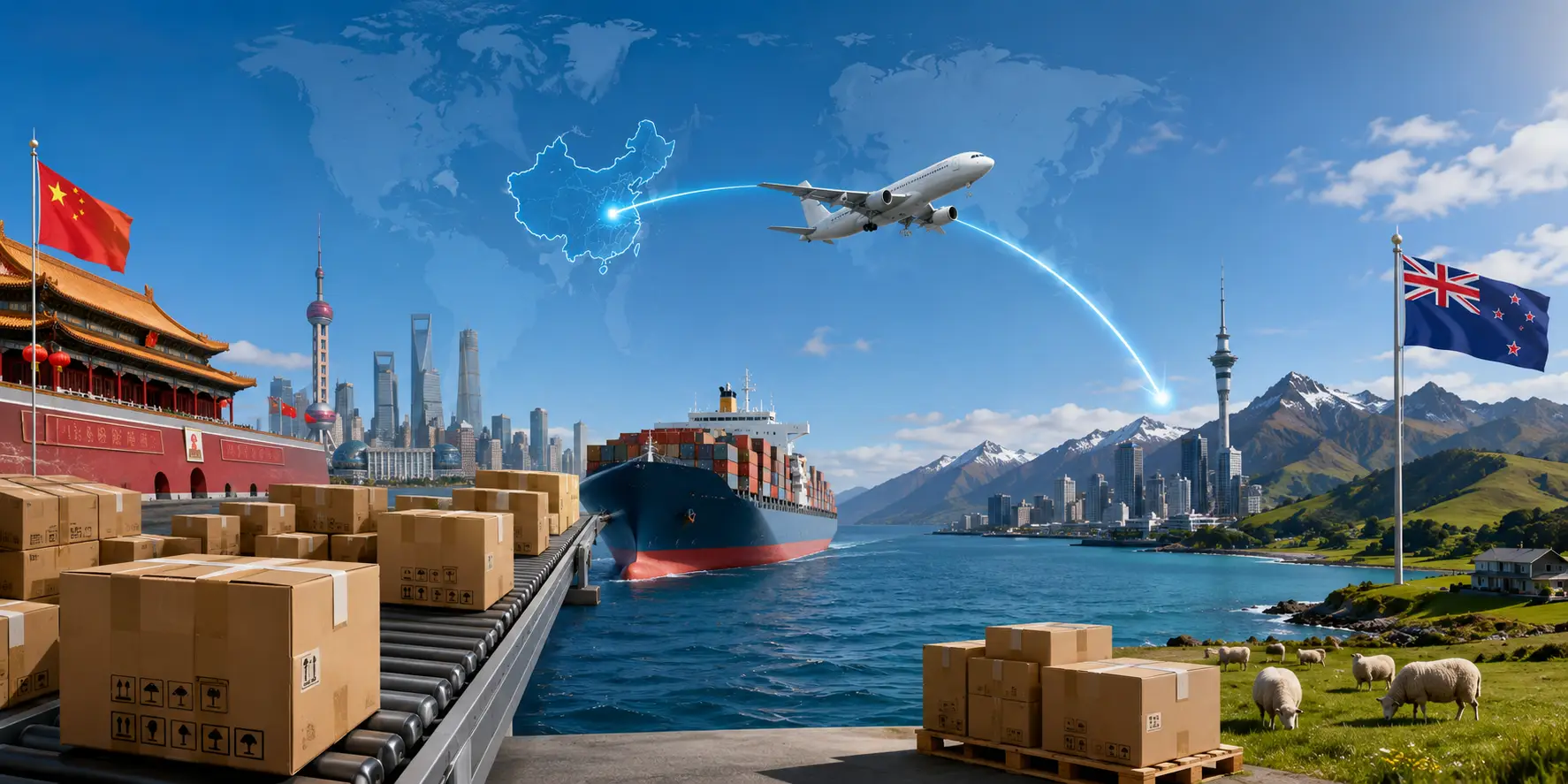
International Express Shipping from China to New Zealand
Rates and Transit Times for Various International Express Carriers (May 27, 2026)
Carrier | Price (5kg) | Transit Time |
DHL | 48-90$/kg | 2–4 days |
FedEx | 45-85$/kg | 3–5 days |
UPS | 46-85$/kg | 3–5 days |
EMS | 33-65$/kg | 7–12 days |
SF Express | 36-75$/kg | 6–9 days |
Why choose express shipping?
Speed and Reliability: Express shipping from China to New Zealand typically takes just 1 to 5 days.
Hassle-Free Customs Clearance: Express carriers maintain their own dedicated customs clearance teams and "green channels," making the process extremely simple—you merely need to pay any applicable duties or simply wait at home to receive your shipment, saving you time and effort.
Tracking and Security: Shipments feature comprehensive tracking capabilities, allowing you to clearly monitor the real-time status of your goods. Furthermore, in the event of loss, full compensation is provided.
In what scenarios is express shipping most suitable?
Urgent Replenishment for E-commerce Platforms: When a store experiences a sudden surge in orders and inventory levels become critically low—situations where the transit times of other shipping methods are simply too slow. Utilizing express shipping for urgent replenishment helps prevent a decline in store ratings and the incurrence of penalty fees.
Sample Shipments: Sending product samples to prospective clients, as well as shipping urgent spare parts or components for manufacturing facilities.
High-Value and High-Added-Value Goods: Ensuring maximum security for the cargo and guaranteeing its punctual delivery into the customer's hands, thereby securing the successful completion of the order.
New Zealand Customs Clearance and Import Duties
GST: New Zealand’s standard tax, with a rate of 15 per cent, applies to almost all imported goods. Goods with a value of less than NZD 1,000 per consignment are exempt from GST, but the tax is still levied if the annual sales of goods on overseas platforms exceed NZD 60,000.
Customs duties: Most handicrafts and consumer goods are subject to 0 per cent duty, whilst clothing and footwear are subject to 5–10 per cent, calculated based on the CIF price.
China-New Zealand Free Trade Agreement: Goods that meet the requirements of the Free Trade Agreement and are accompanied by a Certificate of Origin are eligible for zero duty.
Commercial Cargo Clearance Process
Prepare commercial invoices, packing lists, bills of lading, and—for specialized goods—corresponding inspection reports and compliance documentation.
Engage a freight forwarder to handle the customs clearance formalities.
The customs broker submits the necessary declarations to Customs and MPI.
Pay applicable duties, GST, and other relevant taxes and fees.
Undergo inspections by New Zealand Customs and MPI (if an inspection is required, cooperate with Customs by providing the relevant supporting documents).
Once the cargo has successfully cleared entry into New Zealand, arrange for delivery to the final destination.
Common Customs Clearance Issues and How to Avoid Them
Inaccurate Declaration Information: Verify product names and HS codes on commercial invoices in advance, and ensure consistency across all documentation.
Missing Required Documents: Verify the specific documents required for your products—such as Certificates of Origin, Fumigation Certificates, etc.—prior to shipment.
Biosecurity: Ensure that both the cargo and its packaging are free from soil, insects, and plant residues.
Undervaluation: Declare the actual value of the goods in full compliance with regulations to avoid customs clearance delays and potential fines.
Door-to-Door Shipping from China to New Zealand
Why Choose Door-to-Door Shipping Services?
Who wouldn't want the convenience of waiting at home for a courier to deliver their goods right to their doorstep—just like with online shopping? In the realm of international logistics, door-to-door shipping represents the most streamlined transport solution available to buyers. It is typically incorporated into DDP (Delivered Duty Paid) agreements—specifically referred to as DDP door-to-door shipping.
Under this agreement, your logistics partner handles the entire journey of the goods—from the supplier's location to your designated recipient address. They assume full responsibility for transportation, customs clearance, tax payments, and final delivery; all you have to do is wait to receive your shipment.
The benefits of door-to-door shipping include:
Single Point of Contact: Your designated logistics partner manages the entire shipping process, ensuring clear accountability and eliminating the need for tedious communication with multiple vendors.
Cost Transparency: All associated costs are included in the initial quotation, meaning you will not be required to pay any additional fees.
Reduced Risk of Damage and Loss: With a single logistics provider overseeing the entire operation, the risk of cargo damage or loss is significantly minimized, as the goods are not subjected to multiple transfers and handling stages by various parties.
Selecting the Right Door-to-Door Shipping Provider
Choosing the right door-to-door service provider is crucial—particularly for individual buyers and businesses requiring end-to-end shipping solutions. This provider may well become your long-term strategic partner. You can utilize tools such as Google or GPT to assist you in searching for reliable freight forwarders; regardless of the method you choose, the following are key factors to consider when selecting a shipping partner:
Qualifications and Experience: Possesses valid freight forwarding credentials in China, along with proven experience in shipping from China to destinations such as New Zealand and Europe; you may request to review their past success stories and case studies.
Service Capabilities: Demonstrates the capacity to provide comprehensive, one-stop logistics services covering the entire route from China to New Zealand.
Customs Clearance Expertise: Possesses specialized experience in customs clearance for shipments traveling from China to New Zealand or Europe, and maintains partnerships with professional customs brokerage firms.
Pricing: Offers pricing that is reasonable and competitively positioned within the market.
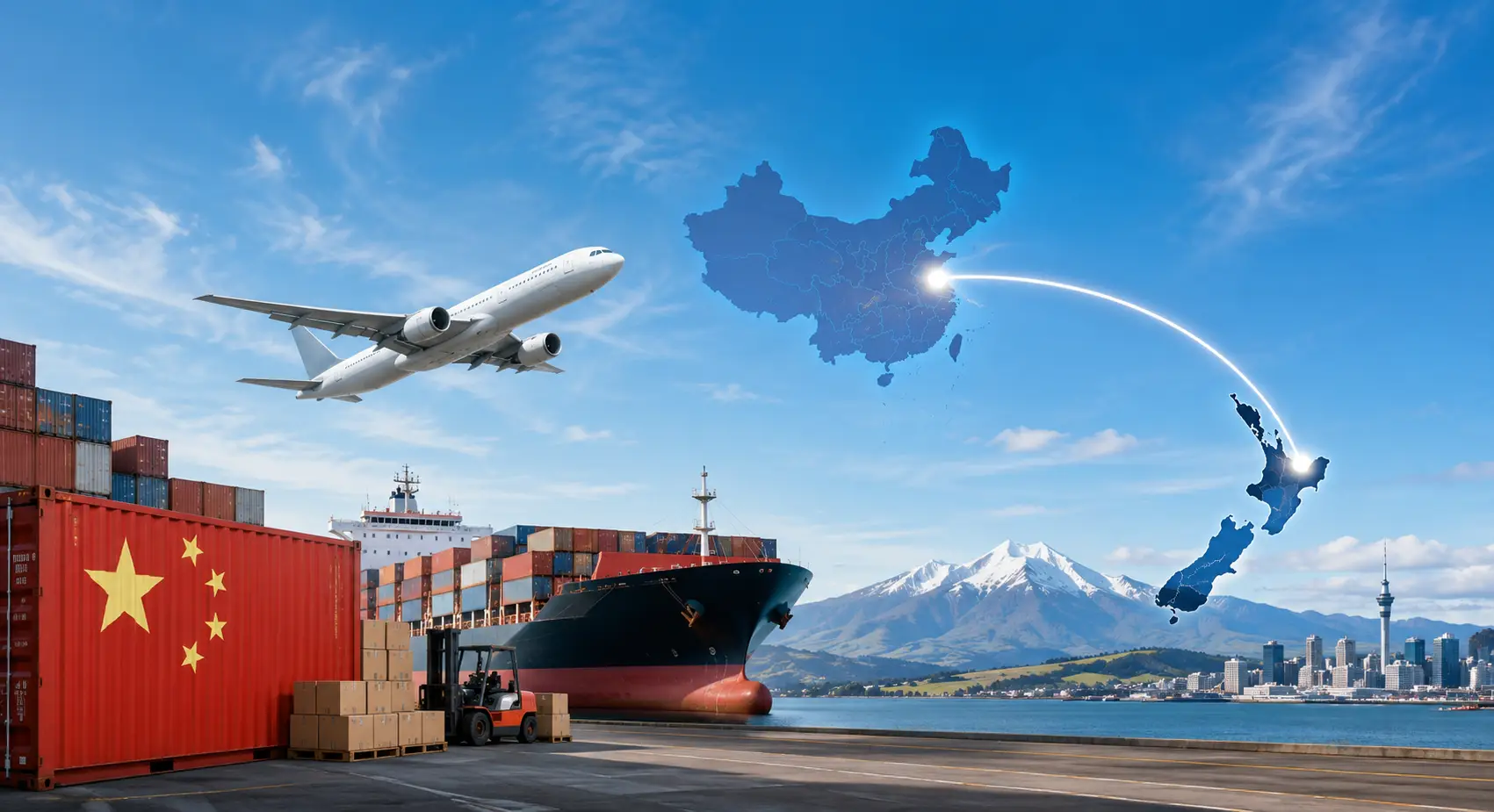
Freight forwarder China to NZ
Why You Need a Freight Forwarder to Handle Shipping from China to New Zealand
The shipping process from China to New Zealand is complex, characterized by stringent regulations and numerous procedural stages. As the vital link connecting buyers and carriers, freight forwarders streamline these processes for both parties, helping buyers mitigate logistical risks while reducing both costs and time commitments. They serve as an indispensable component of the international trade ecosystem.
Beyond providing comprehensive, one-stop logistics solutions, they assist with documentation, arrange cargo insurance, and manage risks to ensure your goods are imported into New Zealand safely and seamlessly. Furthermore, they offer cargo tracking services and develop customized transport plans for specialized goods, effectively resolving complex logistical challenges. This enables businesses of all types to focus on their core operations and confidently venture into the realm of international trade.
How to Choose a Freight Forwarder?
With a wide variety of freight forwarding companies on the market, it is crucial to select the right one and avoid substandard providers.
Qualifications and Industry Experience: A freight forwarding partner with valid licences, experience in transporting goods from China to New Zealand, and a thorough understanding of the relevant routes and challenges.
Good Reputation and Reviews: Positive reviews reflect high-quality service, the ability to respond promptly to issues, and the provision of swift solutions.
One-stop transport service capability: A provider capable of offering a comprehensive, all-inclusive transport service from China to New Zealand, including customs clearance in China, customs clearance in New Zealand and payment of import duties.
Strong resources: Through long-term partnerships with carriers and the integration of network resources, they can offer competitive pricing and smooth transport routes.
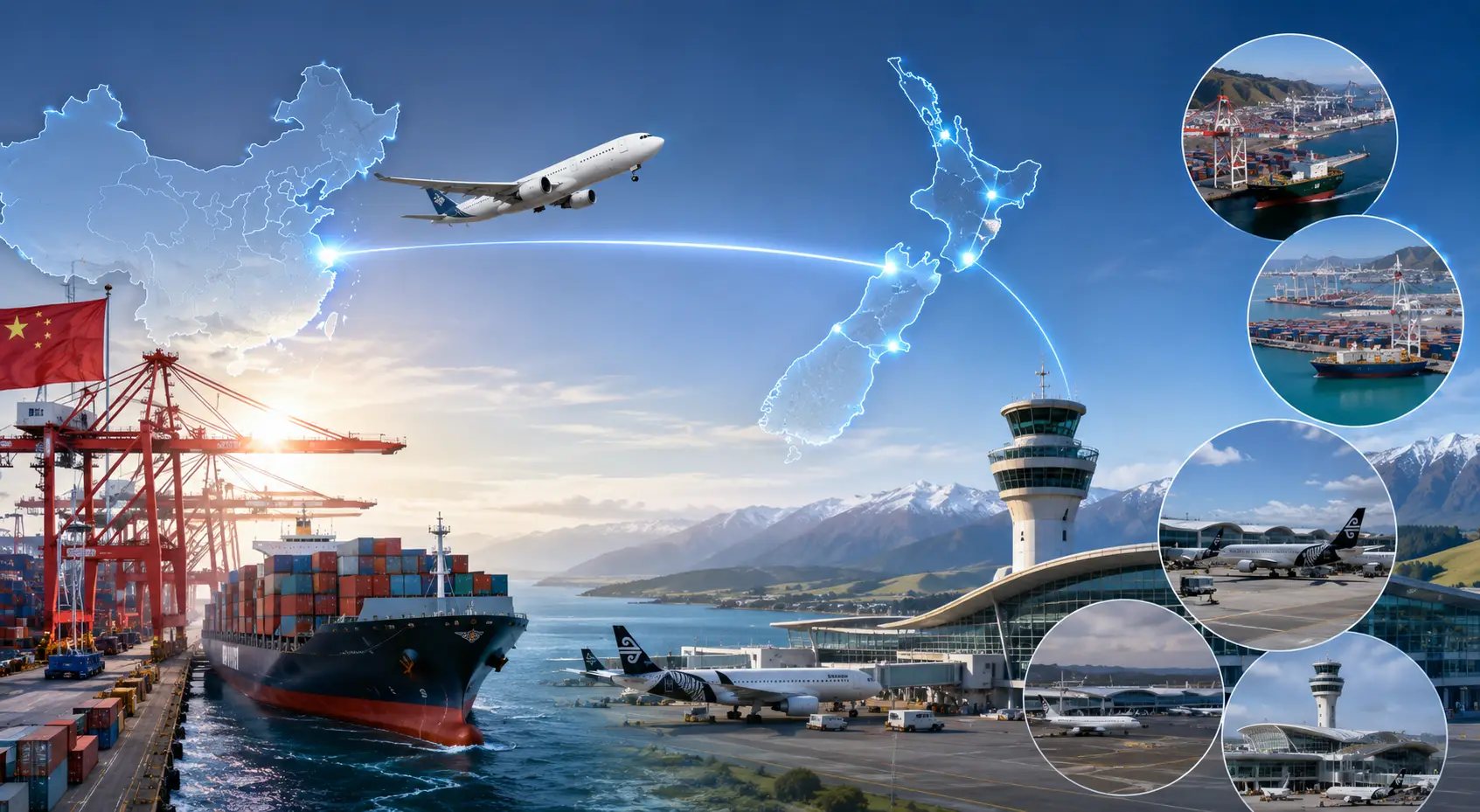
Shipping from China to New Zealand: Major Ports and Airports
Major Ports in China
Shanghai Port:
Extensive route network and ample shipping capacity.
Disadvantages: Relatively high rates; high costs for inland trucking.
Shenzhen Port:
The core hub of South China; highly efficient customs clearance, high volume of e-commerce cargo, and comprehensive LCL services.
Disadvantages: Tight space availability during peak seasons; high rates for heavy cargo.
Ningbo-Zhoushan Port
Developed manufacturing base; competitive rates for heavy cargo.
Disadvantages: Fewer available shipping routes; limited transshipment capabilities.
Major Ports in New Zealand
Port of Auckland
New Zealand's largest multi-purpose port serves as the primary gateway for cargo imports and offers the most efficient customs clearance and inland distribution network.
Disadvantages: Frequent port congestion and high terminal handling fees.
Port of Tauranga
Ranks first in container throughput; serves as the core hub for agricultural and forestry products.
Disadvantages: High inland distribution costs and limited coverage in the southern North Island region.
Port of Lyttelton
The largest port in the South Island offers low distribution costs for the eastern South Island region.
Disadvantages: Limited direct shipping routes and slower customs clearance speeds compared to Auckland.
Major Airports in China
Shanghai Pudong International Airport: Features an extensive route network and offers highly efficient customs clearance for high-tech electronic products.
Guangzhou Baiyun International Airport: The primary export hub for e-commerce cargo, characterized by lower inland transportation costs.
Shenzhen Bao'an International Airport: Boasts highly efficient customs clearance for sensitive goods—such as battery-related products—and demonstrates strong complementarity with airports such as Hong Kong International Airport.
Major Airports in New Zealand
Auckland International Airport: The primary gateway for air cargo entering New Zealand, featuring comprehensive infrastructure and a centralized concentration of customs clearance resources.
Christchurch International Airport: Primarily serves cargo destined for New Zealand's South Island; offers flexible ground handling operations and highly efficient customs clearance for equipment supporting local industrial development.
Wellington International Airport: Ideal for importing cargo destined for the capital city, offering highly efficient customs clearance for routine government and corporate procurement shipments.
Shipping Recommendations for Various Cargo Types
E-commerce Sellers
Entrust a freight forwarder with the first-mile transport of your e-commerce goods to mitigate tax risks and streamline the customs clearance process.
Pre-stock overseas warehouses in advance to prepare for the peak season in June.
Ship in small batches at frequent intervals to avoid inventory accumulation and minimize excessive warehousing fees.
Traditional Foreign Trade Enterprises
Opt for Full Container Load (FCL) shipping.
Leverage Certificates of Origin to benefit from preferential tariff rates under the Free Trade Agreement between China and New Zealand.
Establish long-term contracts with freight forwarders to secure stable shipping slots and long-term preferential pricing.
Private Buyers and Small Businesses
Utilize "double-clearance, tax-inclusive, door-to-door" shipping services.
Opt for Less than Container Load (LCL) shipping to consolidate multiple items into a single package.
Conclusion
In 2026, the shipping market between China and New Zealand is expected to remain stable, with overall pricing remaining relatively reasonable. By partnering with a reliable freight forwarder, you can select the most suitable shipping method, optimize logistics costs, and ensure full customs compliance. Choosing a trustworthy freight forwarder is key to achieving success in the New Zealand market.
Encountering issues with shipments from China to New Zealand? Looking for the latest freight rates? Consult with our experts to discuss the optimal shipping solution for your cargo.
Shipping from China to New Zealand: FAQ
How long does it take to ship items from China to New Zealand?
Sea freight typically takes 25–45 days.
Air freight takes 3–12 days.
Express shipping takes 3–5 days.
Delivery times depend on factors such as the shipping method, destination, customs clearance status, and more.
How can I track a package sent from China to New Zealand via China Post?
You can track your package using your tracking number on the official China Post website. Alternatively, you can obtain the latest updates on your shipment through tracking platforms such as 17TRACK.
What is the process for shipping goods from China to New Zealand?
Cargo Collection
Consolidation and Packaging
Transport to Port/Airport
Export Customs Clearance
International Shipping
New Zealand Customs Clearance
Cargo Delivery to Destination
What happens if wooden packaging lacks the IPPC mark?
It will be detained by New Zealand's MPI (Ministry for Primary Industries) and either returned or destroyed; any associated costs must be borne by the shipper.
Is it possible to ship food products to New Zealand?
Yes, but prior declaration is required. Food items prohibited by customs cannot be shipped.
Get Reliable, Cost-Saving Quotes from China
Air, Sea, Road, Rail, and Multimodal Transport | DDP Services | Covering Over 160 Countries
15 Years of Experience Shipping from China
NVOCC Licensed | WCA Member for 5 Years
Receive a Detailed Quote Within 1–2 Days