Be your Logistics Department in China
Customized logistics solutions, your logistics expert in China
Customized logistics solutions, Shipping from China to the World
Tel:+8613424475220 Email:info@viputrans.com 
 English

As consumer purchasing patterns increasingly shift toward e-commerce, the demand for sourcing goods online has become immense. As the world's largest e-commerce platform, Amazon requires the procurement and shipment of vast quantities of merchandise from China.
Given the transparency of product costs on Amazon and the fierce competition among sellers, the logistics phase—specifically shipping from China to Amazon FBA warehouses—constitutes a critical necessity for Amazon sellers and is key to preserving profit margins.
Consequently, selecting a reliable Amazon FBA freight forwarder in China is paramount to ensuring smooth customs clearance and full compliance with Amazon's FBA packaging requirements.
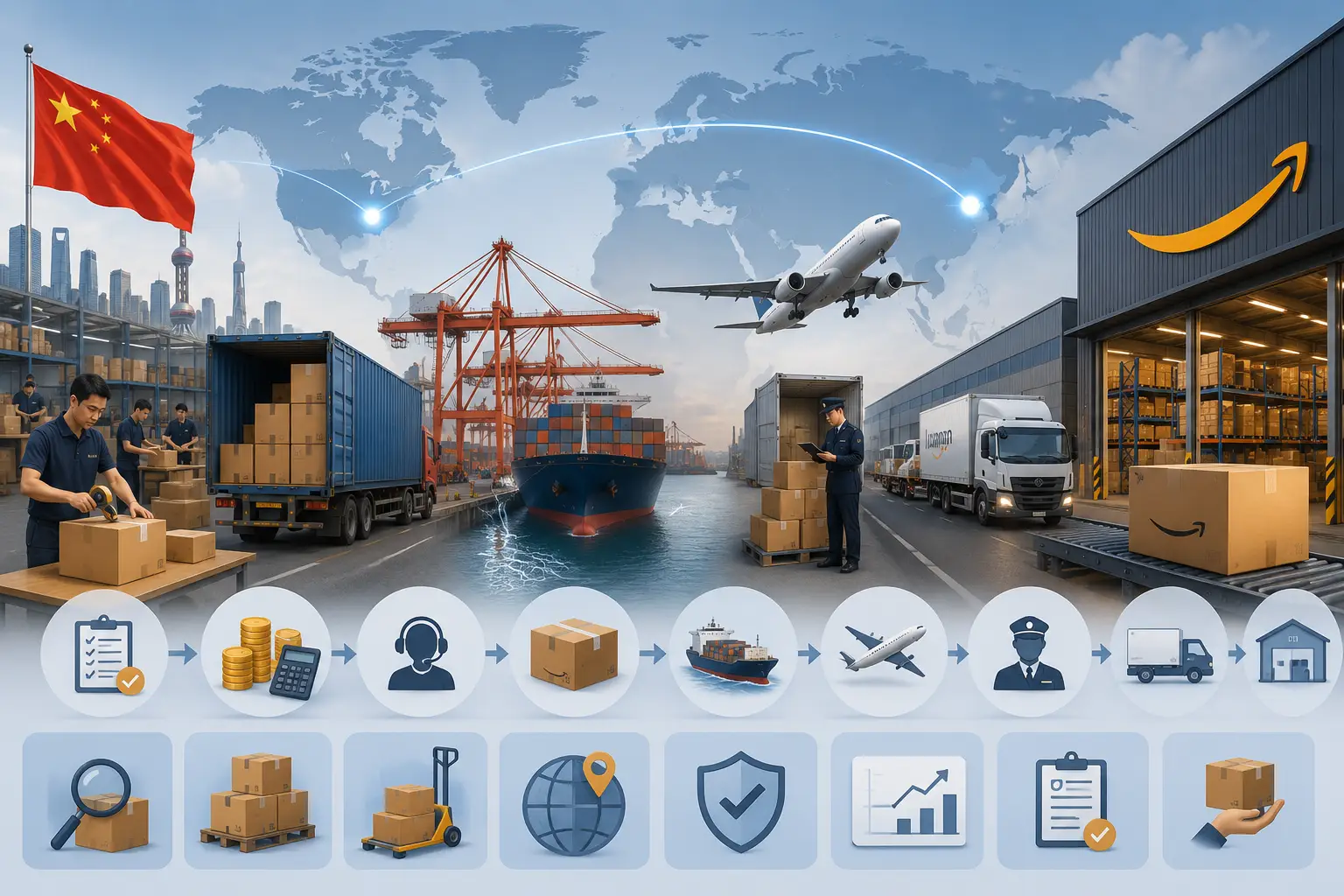
VIPUTRANS possesses extensive experience in delivering shipments to Amazon FBA warehouses, offering high-quality shipping services from China to Amazon FBA. We provide a comprehensive, one-stop logistics solution covering pickup, cargo consolidation, Amazon FBA-compliant labeling, packaging, transportation, and customs clearance.
Sourcing goods from China and shipping them to Amazon for sale can be highly profitable; however, the complexities of FBA pre-shipment logistics, Amazon’s strict warehousing regulations, ever-changing policies, and hidden costs can lead to losses and stock shortages.
This article will guide Amazon sellers—particularly newcomers—through every stage of the process, from shipping goods from Chinese factories to Amazon fulfillment centers. It will help you optimize supply chain costs and achieve success in the marketplace.
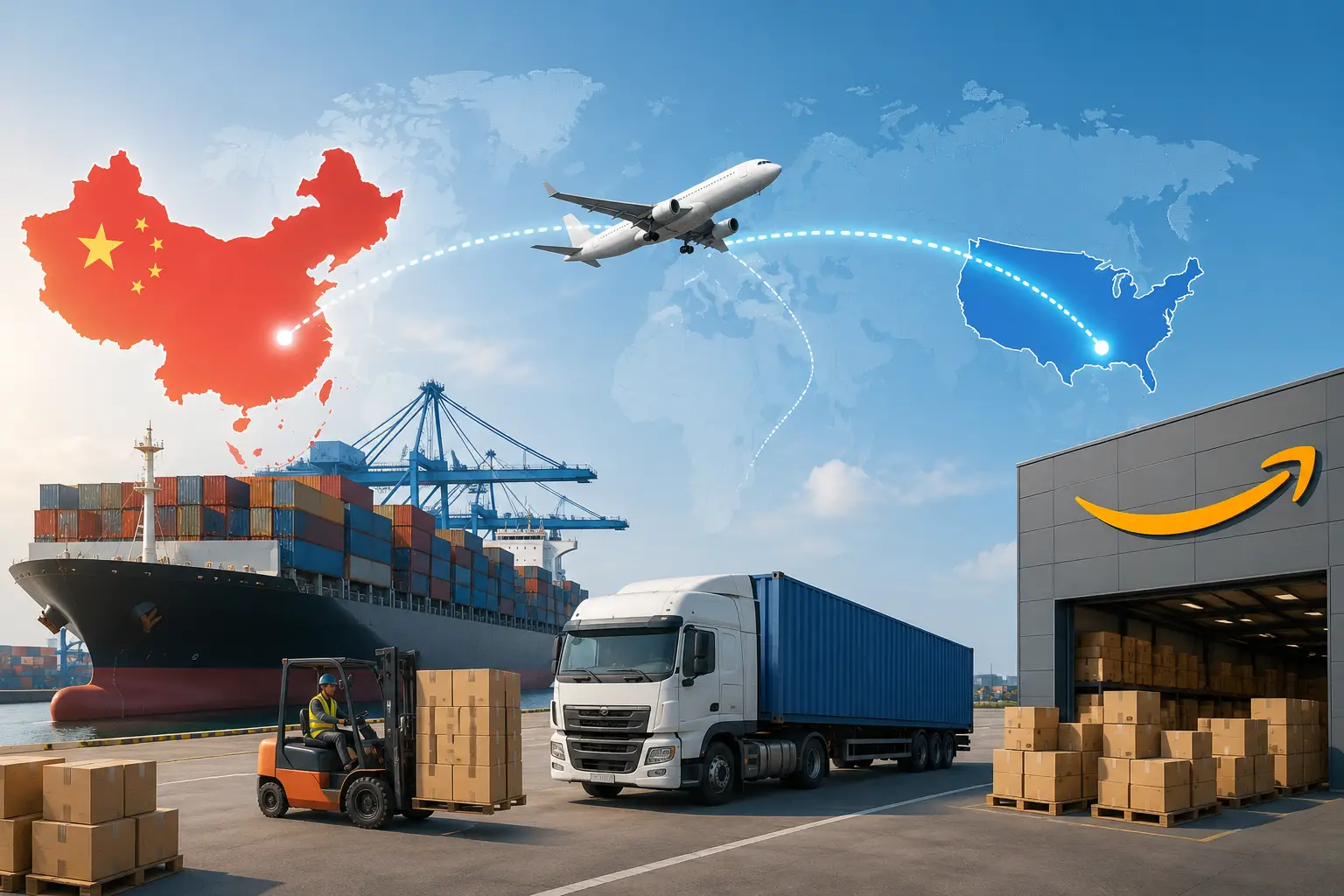
Amazon FBA shipping refers to the logistics process in which a freight forwarder in China transports goods from a warehouse to an Amazon-designated overseas fulfillment center.
The entire process encompasses:
Pickup, warehouse consolidation, packaging, and labeling—ensuring the packaging meets Amazon FBA warehouse requirements;
Export customs clearance;
International transportation;
Destination customs clearance and tax payment;
Scheduling of Amazon inbound appointments and final delivery to the Amazon warehouse.
Amazon itself is officially responsible only for warehouse storage, packaging, distribution to customers, and customer service support.
Selecting an appropriate shipping method is crucial; Amazon sellers should consider factors such as product characteristics, profit margins, and inventory turnover when determining how to transport their goods.
The right logistics strategy can optimize your shipping costs and mitigate logistical risks. Outlined below are four mainstream shipping methods for transporting goods from China to Amazon FBA (Taking Europe and the US as examples)
Shipped via international express carriers such as DHL, UPS, and FedEx.
Transit Time: 3–5 days (USA); 4–6 days (Europe).
Advantages: Fastest transit time; efficient and streamlined customs clearance; full end-to-end tracking available.
Suitable Product Types: Urgent inventory replenishment, high-value small and lightweight items, and new product testing.
Recommended Weight Range: Ideal for shipments weighing between 1 kg and 100 kg.
Shipped via air freight combined with last-mile delivery to Amazon FBA warehouses.
Transit Time: 7–12 days (USA); 10–15 days (Europe).
Advantages: Faster transit time than sea freight; lower cost than international express services.
Suitable Product Types: Medium-value and medium-weight goods; shipments requiring specific transit time guarantees.
Recommended Weight Range: Ideal for shipments weighing between 21 kg and 1,000 kg.
Transit Time: 25–35 days (USA); 35–40 days (Europe).
Advantages: Lowest cost option; capable of transporting extremely large-volume shipments.
Suitable Product Types: Oversized cargo, bulk shipments, and stable, long-term, low-margin goods.
Recommended Weight Range: 100 kg and above (no upper limit).
Transit Time: 18–25 days (Europe).
Advantages: Strikes a balance between cost and transit time; features stable schedules and is less susceptible to external environmental factors.
Suitable Product Types: Suitable for medium-to-heavy cargo; shipments requiring specific transit time guarantees.
Recommended Weight Range: 100 kg and above (no upper limit).
Novice/Trial Sales Phase: Utilize air freight to test the market and validate product sales performance.
Stable Sales Phase: Employ a combination of sea and air freight; use sea freight to replenish inventory and air freight to address stock shortages.
"Bestseller" Phase: Combine standard sea freight, expedited sea freight, and air freight to ensure sufficient inventory levels and prevent stockouts.
Oversized Items: Opt for full-container load (FCL) sea freight to maximize cost-efficiency.
Shipping Method | Cost (USA) | Cost (Europe) |
International Express | $7–$14 | $8–$15 |
air transport | $3.65–$8 | $4.15–$9 |
Sea Freight (Standard) | $0.5–$0.8 | $0.6–$1 |
Sea Freight (Express) | $0.7–$1 | $0.73–$1.2 |
Within China
Pickup Fees
Packaging Fees
Customs Declaration Fees
Documentation Fees
International Transport Segment
Sea Freight / Air Freight / Express Shipping Fees
Fuel Surcharges
Destination Fees
Port Miscellaneous Fees
Customs Clearance Fees
Duties and VAT
Delivery Fees (Delivery to Amazon Warehouse)
Appointment Fees (Scheduling Delivery to Amazon Warehouse)
Potential Additional Fees
Inspection Fees
Peak Season Surcharges
Port Congestion Surcharges
War Risk Surcharges
Storage/Demurrage Fees
Overweight/Oversized Fees
Return/Exchange Processing Fees
Additional Insurance Premiums
Optimize product packaging to minimize unnecessary volumetric weight and piece count.
Select the most suitable shipping method.
Stock up in advance to avoid peak logistics seasons.
Consolidate multiple orders into a single shipment to reduce overall weight and volume.
Choose a reliable Amazon FBA inbound DDP logistics service provider.
Establish a long-term partnership with a logistics provider to secure more favorable rates.
Compare quotes from multiple logistics service providers.
Utilize a third-party overseas warehouse to ship inventory to Amazon fulfillment centers in batches based on sales performance, thereby reducing Amazon storage fees.
This marks the starting point of the process; any errors at this stage could result in Amazon rejecting your shipment.
Log in to Amazon Seller Central.
Navigate to Inventory > Manage Amazon Shipments > Create New Shipment.
Select "Send to Amazon," then enter the SKUs and quantities for your products.
Key Settings
For the packaging type, select either "Case-packed products" or "Individual products."
For both "Prep" and "Labeling," select "Seller."
Confirm the Amazon warehouse address.
Print the FNSKU product labels and the outer carton labels; create backup copies just in case.
Ensure the supplier manufactures and packages goods in accordance with Amazon standards.
Confirm the delivery schedule, location, and method (self-pickup or delivery).
Obtain the packing list and commercial invoice from the supplier.
Reliable Amazon FBA freight forwarders possess extensive shipping experience; they have a thorough understanding of the Amazon FBA shipping process and have successfully navigated and resolved the associated risks. With them, your cargo is in professional hands.
Not only do they help reduce logistics costs and provide comprehensive warehousing support services, but they also possess the capability to handle Amazon FBA DDP shipments. This allows them to maximize the simplification of your logistics operations.
Comprehensive One-Stop Shipping Services from China to Amazon FBA: Professional FBA freight forwarders provide reliable DDP (Delivered Duty Paid) shipping services, handling the entire logistics chain—from the supplier's facility all the way to the Amazon FBA warehouse.
Reduced Logistics Costs: By consolidating cargo packaging and leveraging long-standing partnerships with carriers, they effectively lower your overall logistics expenses.
Expertise in FBA Inbound Requirements: They possess an in-depth understanding of Amazon's specific packaging and labeling mandates, ensuring that your shipments remain fully compliant, arrive on time, and are received safely at the FBA facility.
Robust Customs Clearance Capabilities: Highly familiar with customs clearance procedures and regulatory policies, they are capable of managing all necessary documentation to successfully clear customs and facilitate the payment of VAT and import duties.
Extensive experience in Amazon FBA inbound logistics, coupled with a thorough understanding of Amazon's FBA receiving requirements.
Capable of providing comprehensive ancillary warehousing services—including labeling, repackaging, cargo consolidation, and quality inspection—to ensure that all shipments fully comply with Amazon FBA receiving standards prior to dispatch.
Offers end-to-end, one-stop logistics solutions—from the supplier's facility directly to Amazon FBA warehouses—covering DDP (Delivered Duty Paid) terms, including customs clearance and tax handling.
Possesses proven experience and management capabilities for coordinating simultaneous shipments to multiple Amazon FBA warehouses.
Maintains robust contingency mechanisms and rapid response capabilities to address urgent situations; fully cognizant of potential risk points and experienced in successfully overcoming logistical challenges.
Amazon imposes strict requirements regarding product packaging and labeling; indeed, more than half of all inbound inventory issues stem from this area.
While you can arrange for your suppliers to apply labels during the packing process, this approach becomes challenging to manage centrally when sourcing products from multiple vendors. There is no guarantee that every supplier is sufficiently familiar with Amazon FBA's specific packaging and labeling protocols—a lack of adherence to these standards can easily result in Amazon FBA rejecting your shipment.
Typically, the responsibility for shipping goods from China to Amazon FBA is entrusted to your freight forwarder. Not only are they well-versed in Amazon FBA's inbound receiving requirements, but they can also assist you in inspecting the merchandise and verifying inventory counts. This helps prevent defective products from reaching your customers—a scenario that could otherwise lead to a surge in negative reviews and severely damage your Amazon store's overall seller rating.
Clear and scannable (do not print on standard paper, as it is prone to wear and tear).
Affix the label to the outermost layer of the product packaging; do not place it over the package's seal.
Do not obscure the product's UPC code or any other barcodes.
Apply one label to each individual sellable unit (for multi-item sets, apply the label to the outer packaging).
Important Note: When using a laser printer on adhesive label paper, the toner is prone to flaking off after application. This can render the label unscannable, resulting in the product being classified as unsellable.
Recommendation: Use a thermal printer with thermal paper, or purchase label paper that is approved by Amazon.
Outer cartons must be sturdy enough to withstand stacking loads.
The weight of a single carton must not exceed 50 lbs (22.7 kg); if it does, a "Team Lift" label must be affixed.
If the weight exceeds 100 lbs (45 kg), a "Mech Lift" label must be affixed.
No single dimension may exceed 25 inches (63.5 cm), and the longest dimension must not exceed 60 inches (152.4 cm).
New, undamaged boxes with no brand markings.
Internal cushioning (such as bubble wrap) must be used to prevent shifting.
Ensure the packaging is sufficiently sturdy to withstand crushing.
Prohibited: Materials that generate loose debris—such as shredded paper or cellophane—to prevent them from being drawn into conveyor belts.
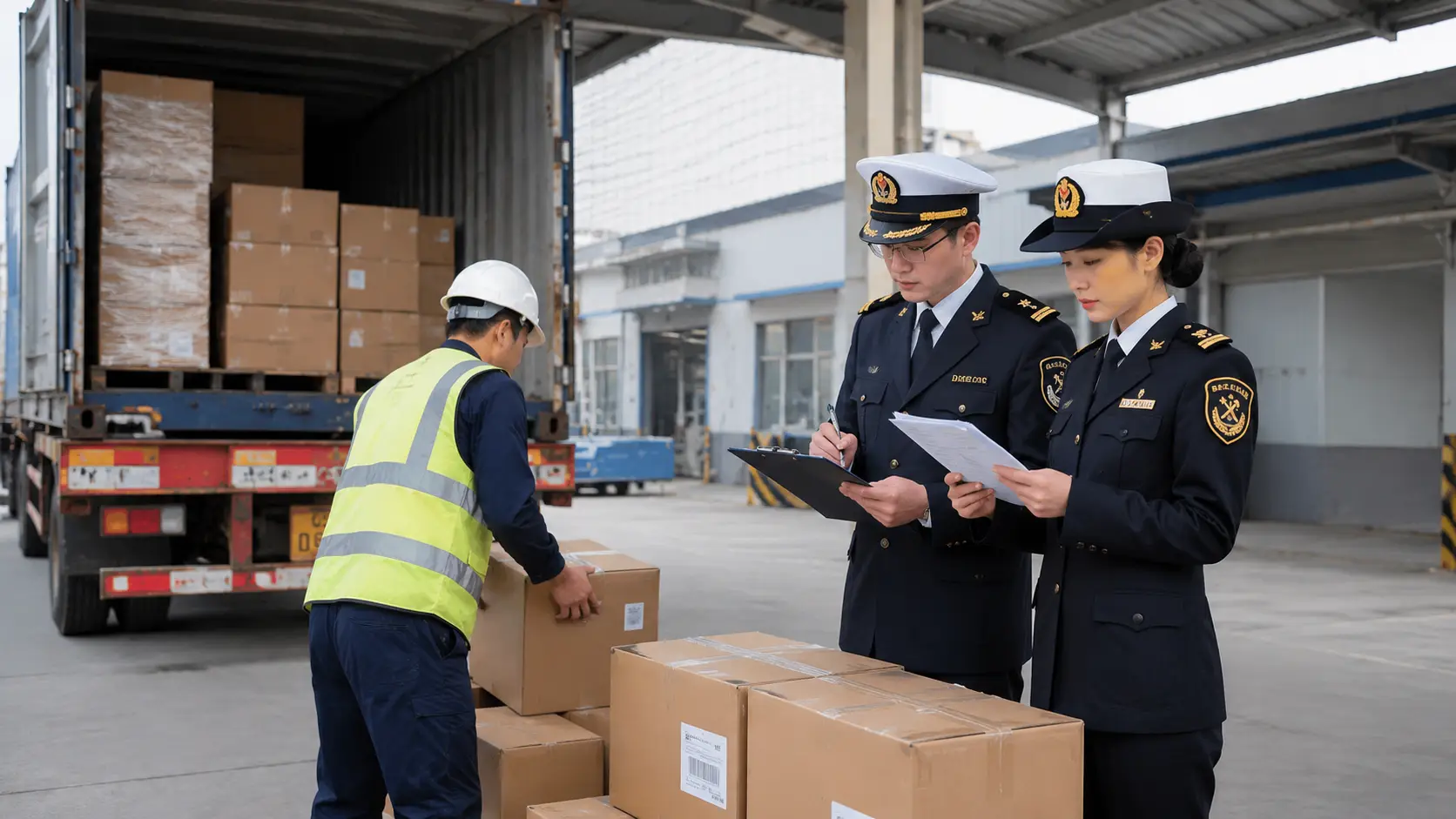
The freight forwarder prepares the customs declaration documents based on your packing list and commercial invoice.
An export declaration is filed with China Customs.
Assuming everything proceeds smoothly, Customs grants clearance, and arrangements are made to load the cargo onto an aircraft, vessel, or train.
Note: For buyers who do not possess their own import/export license, the freight forwarder can provide "customs clearance by proxy" services.
Once the cargo has been shipped, the freight forwarder provides the tracking number.
The cargo is transported to the designated customs clearance point in the destination country to undergo clearance procedures.
Before customs clearance, you must prepare all the necessary documentation for your shipment.
Regardless of the destination country, the following documents are always required:
Commercial Invoice
This document details information regarding the buyer and seller, a description of the goods, HS codes, and other relevant data; it serves as the primary basis for determining applicable customs duties and taxes.
Packing List
This document itemizes detailed information about the shipment, including gross weight, volume, quantity, and other specifics, facilitating customs officials in verifying the accuracy of the cargo.
Transport Documents
These documents constitute the contractual agreement between you and the carrier (shipowner), serving as proof of the shipment's existence and transport status, while clearly delineating the respective responsibilities of both parties.
Importer Registration
This process identifies the designated entity—known as the Importer of Record (IOR)—that assumes full legal, tax, and regulatory compliance responsibility for the imported goods. This identifier is referred to as an "IOR Number" in the United States and an "EORI Number" in Europe.
While shipping from China to Amazon FBA involves extensive documentation, proper advance planning and organization can significantly enhance the efficiency of customs clearance and warehouse receiving.
We recommend partnering with a professional Amazon FBA freight forwarder.
They can assist you with customs clearance, tax payments, and door-to-door delivery services.
They possess keen awareness of—and respond swiftly to—the regulatory requirements of the destination country.
They meticulously verify all documentation prior to shipment.
They maintain long-term records of all customs clearance and certification documents.
Attempting to become an Amazon seller sourcing goods from China can be highly profitable, yet it is also fraught with challenges. Shipping from China to Amazon FBA is a complex logistical undertaking involving multiple stages and various national laws and regulations.
Selecting a reliable FBA freight forwarding partner is crucial; they can not only help you save on costs but also assist in mitigating various risks, thereby allowing you to focus your efforts on product sales and achieve success in the Amazon marketplace.
Whether for small-batch testing or large-scale inventory stocking, VIPUTRANS provides professional shipping services from China to Amazon FBA. Experiencing difficulties with your FBA shipments? Contact our experts to receive a cost-optimized quote!
Yes, we provide shipping services from China to Amazon FBA. This includes pickup from China, cargo consolidation, warehousing, packaging, and labeling in compliance with Amazon FBA requirements, export customs clearance in China, destination customs clearance and tax payment, and last-mile delivery.
There is no single "best" option; the choice of transportation method depends on a variety of factors—including cargo type, shipment volume, time sensitivity, budget, and destination. You are welcome to contact our experts, who can provide you with a customized shipping solution tailored specifically to your needs.
There are four main categories of core costs:
Costs within China: Pickup fees, customs declaration fees, packaging and labeling fees, and warehousing fees.
International shipping costs.
Destination customs clearance fees, customs duties, and VAT.
Delivery costs to the Amazon warehouse.
Core operations within the Amazon Seller Central dashboard: generating labels, and preparing the shipment and necessary documentation.
Selecting a reliable logistics partner.
Freight forwarder executes pickup, labeling, packaging, customs declaration, and transportation to the destination country.
Completion of customs clearance and payment of duties/taxes.
Last-mile delivery to the Amazon FBA warehouse.
A recommended range is $7,000 to $10,000.
You will need to allocate funds for the following expenses:
The cost of your initial inventory
FBA inbound shipping fees
Operational and promotional costs
Platform and compliance fees
Reserve funds for working capital
Air, Sea, Road, Rail, and Multimodal Transport | DDP Services | Covering Over 160 Countries
15 Years of Experience Shipping from China
NVOCC Licensed | WCA Member for 5 Years
Receive a Detailed Quote Within 1–2 Days
Copyright © 2003-2026 VIPU Supply Chain Logistics Co., Ltd. | All Rights Reserved
LOGISTICS | E-COMMERCIAL FULFILLMENT | ABOUT US | CASE | NEWS | VIDEO | CONTACT US
We will find the fastest or the cheapest way for your shipment. Please specify: where from, where to, what to ship.